When More Trees Mean Less Habitat
Trees are not always a sign of recovery. In grasslands and sagebrush country, woody encroachment can reduce forage, water and wildlife habitat.

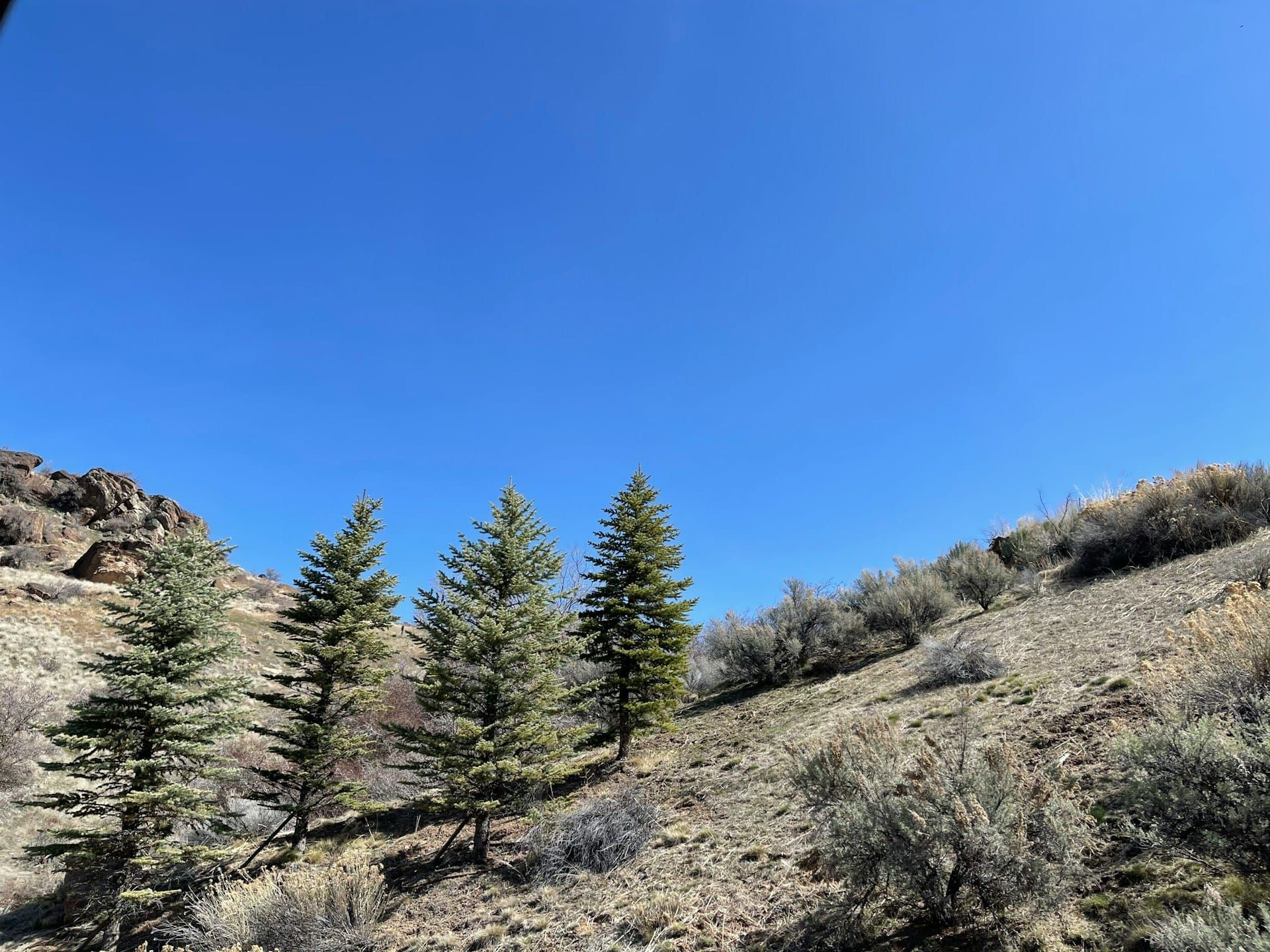
A green hillside can look healthy while its habitat is disappearing.
Across grasslands and sagebrush country, expanding juniper, pinyon and other woody plants can replace open plant communities that wildlife depends on. The change may happen slowly enough to be mistaken for natural succession—or even improvement. Trees arrive. Bare branches become shade. The country looks fuller.
But more woody cover is not automatically more ecological function.
Pitchstone’s 2019 archive item Restoring Elk Country—Little Snowy Mountains, Montana described a project that cut dense young ponderosa pine from aspen stands and open grasslands, then used prescribed fire. The purpose was not to wage war on trees. It was to recover forage, plant diversity and habitat structure that had been lost as fire was excluded and stands became denser.
That old story deserves rescue because current evidence makes its management question sharper.
The right plant in the wrong pattern
Woody plants belong in many western landscapes. Mature pinyon-juniper woodlands provide habitat, shelter and cultural value. The problem arises when trees become denser within woodlands or expand into shrublands and grasslands whose function depends on open space.
The USGS SageSTEP program reports that pinyon and juniper expansion can compete with other plants for water, disrupt habitat for sagebrush-dependent wildlife, add woody fuels and increase the risk of cheatgrass invasion after disturbance. It also emphasizes that cutting, shredding and prescribed fire produce different tradeoffs for vegetation, soils, erosion, birds and insects.
A USGS synthesis of pinyon-juniper removal research reaches the same practical conclusion: treatment effects vary by site, method and ecological condition. Prescribed fire may restore open structure but can increase erosion or exotic-plant risk on vulnerable ground. Mechanical removal avoids some fire risks while creating soil disturbance and leaving material that must be managed.
The decision is not “trees or no trees.” It is which structure this place can support, which species depend on it and which intervention creates the fewest new problems.
Recovery is more than tree mortality
Recent Great Plains research adds a useful test. A 2025 study of grasslands encroached by eastern redcedar found that stand-consuming prescribed fire increased herbaceous cover and species richness and shifted plant communities toward grassland reference conditions. Yet some woodland legacies persisted, and grass cover declined a decade after treatment, suggesting that follow-up fire may be necessary.
Killing trees was the beginning of restoration, not its completion.
A credible treatment should therefore monitor what returns. Are perennial grasses and forbs recovering? Is bare ground increasing? Are invasive annuals appearing? Is aspen recruitment protected from repeated browsing? Has forage improved in the season wildlife needs it? Will maintenance occur before seedlings recreate the original problem?
These questions also protect against over-treatment. Old trees, intact woodlands, steep slopes and sites with high invasion risk may call for restraint or a different method. A target based only on acres cleared can reward damage as easily as restoration.
Manage the transition
The rescued lesson from the Little Snowy Mountains is not that machinery and fire are always good. It is that passive appearance can hide active ecological loss—and that restoring wildlife habitat sometimes requires removing vegetation rather than adding it.
Management should begin by naming the desired community and the evidence that the site historically supported it. It should identify the wildlife and watershed functions at stake, compare treatment risks and budget for follow-up. Most of all, it should judge success by the land that develops after intervention.
Trees are not the enemy. Neither are grasslands empty land waiting to become forest. Stewardship requires knowing which living pattern belongs to the place—and accepting responsibility for the transition we create.