Explore Pitchstone · Hub 03
Wildlife & Biodiversity.
Habitat, populations, predators, migration and relationships among species.
Begin reading ↓The governing idea
Wildlife cannot be separated from habitat—or from the decisions made around it.
Wildlife management begins with living conditions: the structure of vegetation, reliable water, connected habitat and room for populations to move. It also confronts difficult questions about predators, competition, abundance and intervention.
Biodiversity is best understood through relationships and observed consequences—not through a label applied to one animal or plant in isolation.
Explore The Land is One System →Six ways into the subject
Follow the relationships.
Animals are parts and agents of the landscapes they live in. Each pathway follows one set of those relationships.
Habitat & Biodiversity
The food, water, cover and spatial conditions that make wildlife possible.
Wildlife Management
How abundance, reproduction, mortality and carrying conditions shape decisions through time.
Predators & Coexistence
The ecological role of predators and the conflicts that follow their return or removal.
Migration & Connectivity
Why connected landscapes and seasonal access matter across property boundaries.
Native, Exotic & Invasive Species
How evidence can clarify what labels alone cannot.
Wild Horses & Burros
How population, habitat, welfare and public policy meet on shared land.
A landscape question
Wildlife does not recognize the lines on a map.
Animals cross fences, jurisdictions and management categories. Durable decisions must account for movement, habitat continuity and consequences beyond a single parcel.
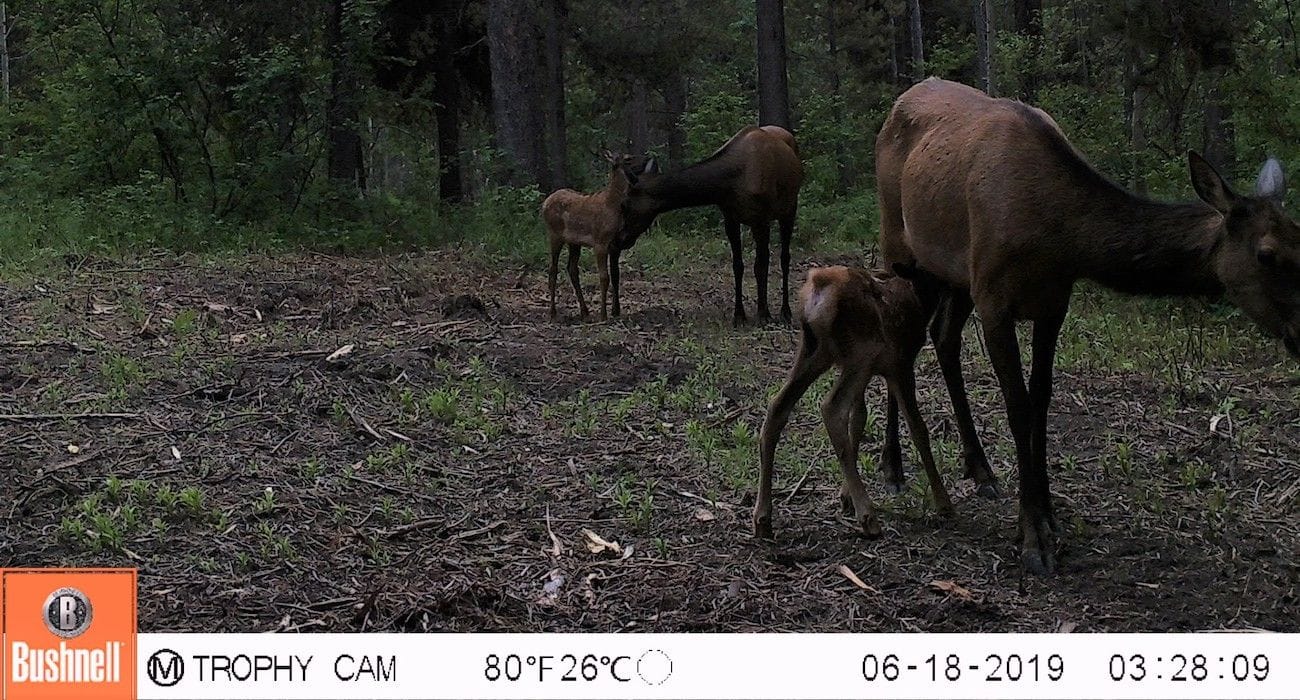
Trail-camera record: a cow and calves using forest cover in June.
Wildlife, conflict
and recovery.
Two Guides to start with, then five pieces from the archive on predators, species labels, recovery, wild horses and habitat.
Ethical Wildlife Management
Hunting, predators, removals and recovery considered through outcomes and responsibility to animals.
Read the Guide → Then: Native, Exotic & Invasive Species →My Rancher Parents Hate Wolves. I Took Them on a Wolf-Watching Tour in Yellowstone
Predator coexistence: what changes when people see wolves for themselves.
Read →It’s Time to Stop Demonizing “Invasive” Species
Species framing: why the label can obscure what an animal or plant is doing.
Read →Elk Return to Kentucky, Bringing Economic Life
Recovery and coexistence: a restored population and the communities around it.
Read →The SAFE Act Would Ban Horse Slaughter. It Would Not Solve the Wild Horse Problem
Wild horse policy: why one law leaves the population question open.
Read →Deer Culling Does Not Improve Deer: Common Sense Habitat Management Does
Habitat versus culling: the case for managing conditions, not just numbers.
Read →A practical lens
Ask what role a species is playing here and now.
Origin can be relevant, but it does not by itself describe ecological effect. Population density, behavior, habitat condition, interactions with other species and available management choices all belong in the assessment.
Open the species Guide →Wildlife outcomes are stewardship outcomes.
Wildlife & Biodiversity is one of five connected hubs. Habitat is shaped by every decision made on the land.