A Pitchstone Guide
Ethical Wildlife Management
What do people owe wildlife when intervention is unavoidable?
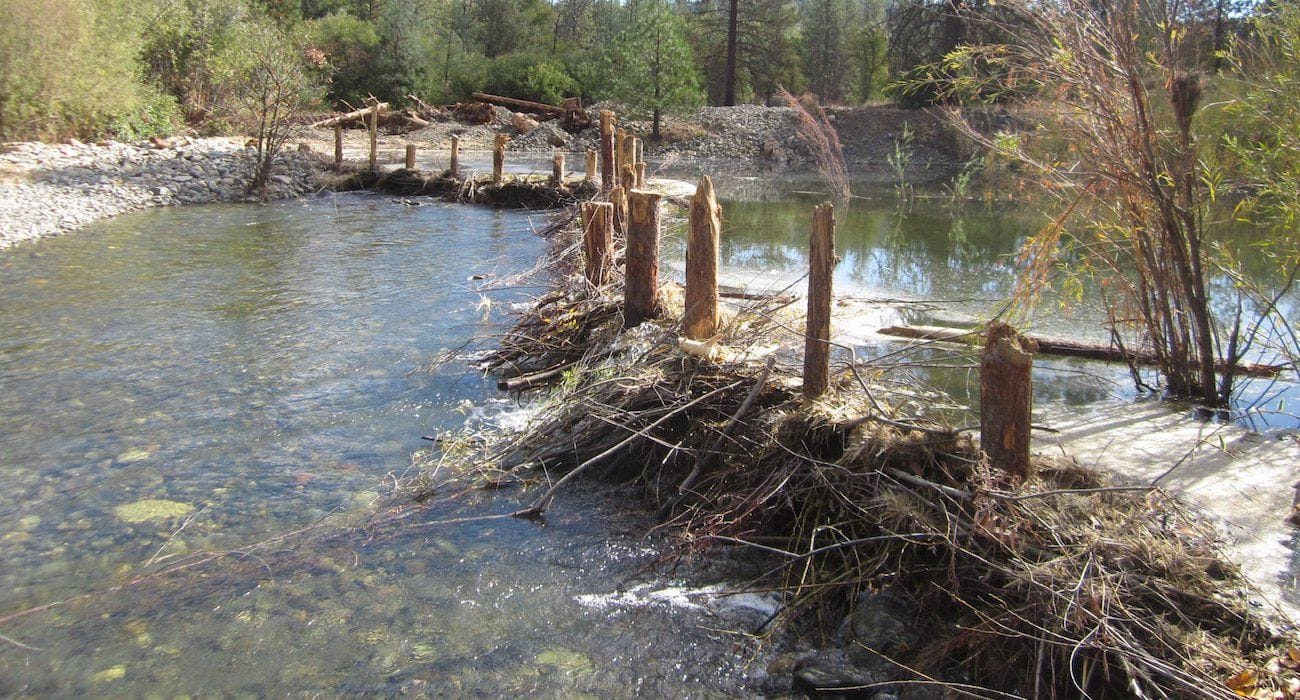
Read the Guide ↓Artificial beaver dams under construction on Pitchstone land
The governing responsibility
Care for populations without losing sight of animals.
Wildlife decisions may involve habitat work, hunting, predator policy, relocation, fertility control or lethal removal. Each can create benefits, suffering, unintended effects and unequal burdens.
An ethical decision states the ecological objective, tests the evidence, considers feasible alternatives and remains accountable for what happens to both the population and the animals affected.
Explore The Land is One System →Six questions before action
Make the tradeoffs visible.
Ask them in order. A decision that cannot answer one of them is not ready to act on.
What is the problem?
Define the observed condition rather than assuming a species is the problem.
What outcome is sought?
Name the habitat, population or welfare objective and the time horizon.
What evidence connects action to outcome?
Separate demonstrated effects from convention, fear and political convenience.
What alternatives are feasible?
Compare prevention, habitat change, coexistence, relocation and lethal methods honestly.
Who and what bears the cost?
Count animal suffering, ecological risk, public expense and burdens on local people.
How will results be reviewed?
Monitor outcomes and change course when the intervention fails its stated purpose.
Nonlethal is not automatically humane. Lethal is not automatically effective.
Delay, displacement, starvation, conflict and habitat decline can impose suffering even when no animal is intentionally killed.
Conversely, lethal control can be poorly targeted, ecologically counterproductive or ethically indefensible. Methods must be judged by their full consequences.
Hunting, predators, control and recovery.
Eight pieces from the Pitchstone archive, grouped by the argument they make rather than the date they were published.
Hunting and competing responsibilities
When ranching, ecology and hunting claim the same animals.
Predators and coexistence
Living with predators, and what removal or return changes.
Control and its tradeoffs
What population control costs, and whether it works.
What the framework requires
Be explicit about ends and means.
Objectives, evidence, alternatives and harms should be visible, and managers should remain accountable for actual consequences.
What remains uncertain
Ethics does not remove every hard choice.
Knowledge, feasibility and tradeoffs vary. A decision should be revised when results depart from its ecological or welfare promise.
Ethics is shared by every hub.
This Guide belongs to Wildlife & Biodiversity and People & Stewardship. Its questions return to habitat, institutions and the land as one system.