
Why Land Recovery Can Stall After the Pressure Is Gone
Removing grazing, fire or another pressure does not guarantee recovery. Thresholds and feedbacks can keep damaged land in a different state.

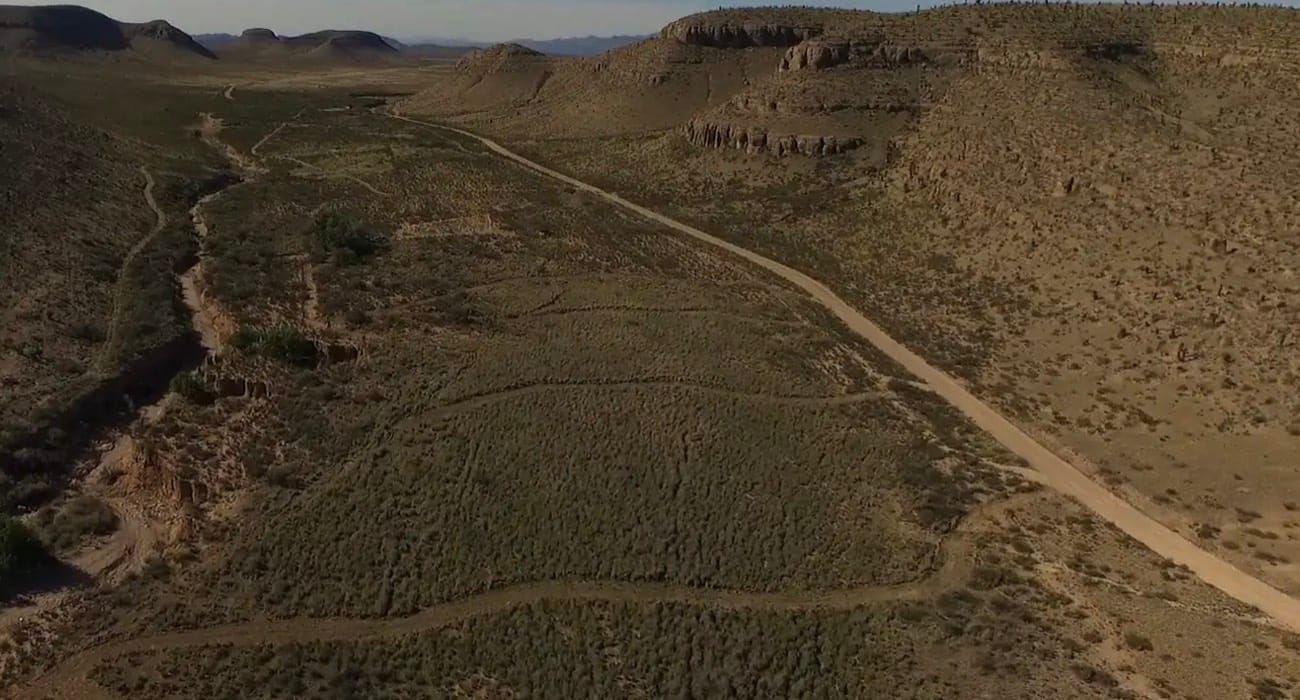
Remove the pressure and the land should recover. That expectation is reasonable—and sometimes correct. Plants regrow, litter accumulates, roots rebuild and exposed soil begins to close.
But some land does not retrace the path by which it changed. Years after the original pressure is reduced, runoff still escapes, shrubs continue to dominate or desired grasses fail to establish. The delay may reflect slow recovery. It may also indicate that the system itself has changed.
A condition can become self-reinforcing
Imagine a grassland losing perennial cover. As gaps connect, wind and water move more soil and seeds. Less water enters the ground between plants. Fertility and biological activity become concentrated under shrubs. With less continuous grass, fire becomes less frequent, giving woody plants another advantage.
The original disturbance may have begun the change. The new pattern can then help maintain itself.
USDA Agricultural Research Service guidance on state-and-transition models distinguishes ordinary shifts within an ecological state from transitions into a different state. Within-state changes may reverse through succession or management. After a transition, removing the original pressure may be insufficient; active restoration may be needed, and full reversal may not be possible.
This is the logic behind an ecological threshold. It is not a magic number painted on the ground. It is a change in structure and process large enough that the former recovery pathway no longer works as expected.
Feedbacks explain why the return path differs
A feedback occurs when a change alters conditions in a way that reinforces or counteracts that change. More perennial cover can slow runoff, capture litter and improve the microsites where additional plants establish. That is a reinforcing recovery feedback.
The reverse can also occur. Low cover can increase erosion; erosion can remove the soil properties needed for establishment; poor establishment then leaves cover low. In drylands, the interaction among vegetation, soil redistribution and water capture can be more consequential than the removal of any single pressure.
The USDA-ARS review Threshold Concepts and Their Use in Rangeland Management and Restoration warns against treating thresholds as simple classification cutoffs. Thresholds can be difficult to locate, vary among sites and involve interacting structural and functional changes. Declaring land “irreversible” too early can abandon recoverable ground. Assuming recovery is automatic can waste years.
Time lag is not the same as a threshold
Slow recovery can look like no recovery. Perennial plants may require favorable establishment years. Seed sources may be distant. Soil organisms and surface structure may rebuild gradually. Rainfall after treatment may be insufficient to show the treatment’s potential.
Before concluding that a threshold has been crossed, ask:
- Are desired plants absent, or present but slow to expand?
- Is seed available at the right time and place?
- Do soil surfaces still capture water and organic material?
- Are erosion and bare-ground connectivity improving, stable or worsening?
- Has the site received weather capable of testing recovery?
- Is another pressure—concentrated use, altered fire, invasive plants or repeated disturbance—still operating?
The Interpreting Indicators of Rangeland Health protocol emphasizes comparison with an ecological reference rather than a universal standard. State-and-transition models are hypotheses grounded in site knowledge; they should guide observation, not replace it.
Match intervention to the process that is stuck
If plants remain but recovery is limited by repeated use, timing and recovery periods may be the principal levers. If runoff is removing seed and soil, changing hydrologic pathways may come first. If woody plants monopolize resources, selective treatment may be necessary. If the surface horizon has been lost, seeding alone may have little chance without creating safe sites and retaining water.
This is why an intervention should have a stated mechanism: what process will it change, and what observation would show that the process responded?
Pitchstone’s recent article Before You Subsoil a Pasture, Check What Is Stopping the Roots applies the same discipline to mechanical treatment. The tool is secondary to the diagnosis.
Recovery is a testable proposition
The practical value of threshold thinking is not pessimism. It is recognizing that stopping damage and rebuilding function are different jobs.
Choose indicators tied to the suspected feedback: perennial basal cover, gap size, runoff pathways, recruitment, soil-surface stability or the distribution of organic material. Set repeat points and expected time frames. If the indicators do not move, revisit the mechanism before repeating the treatment.
Land can surprise us in both directions. Some sites recover after years of apparent stasis. Others remain trapped because the conditions that once supported recovery have been lost. Good stewardship keeps both possibilities open—and asks the field to decide.
Editorial note: This is a Pitchstone Waters institutional editorial developed with AI assistance under human direction. It draws on Chris Gill’s published work and Pitchstone’s documented principles, but it is not presented as a new article written by Chris.
