Before You Move Dirt, Read the Water
Before reshaping a dry landscape, understand where water flows, where soil is exposed, and what the land is already telling you.

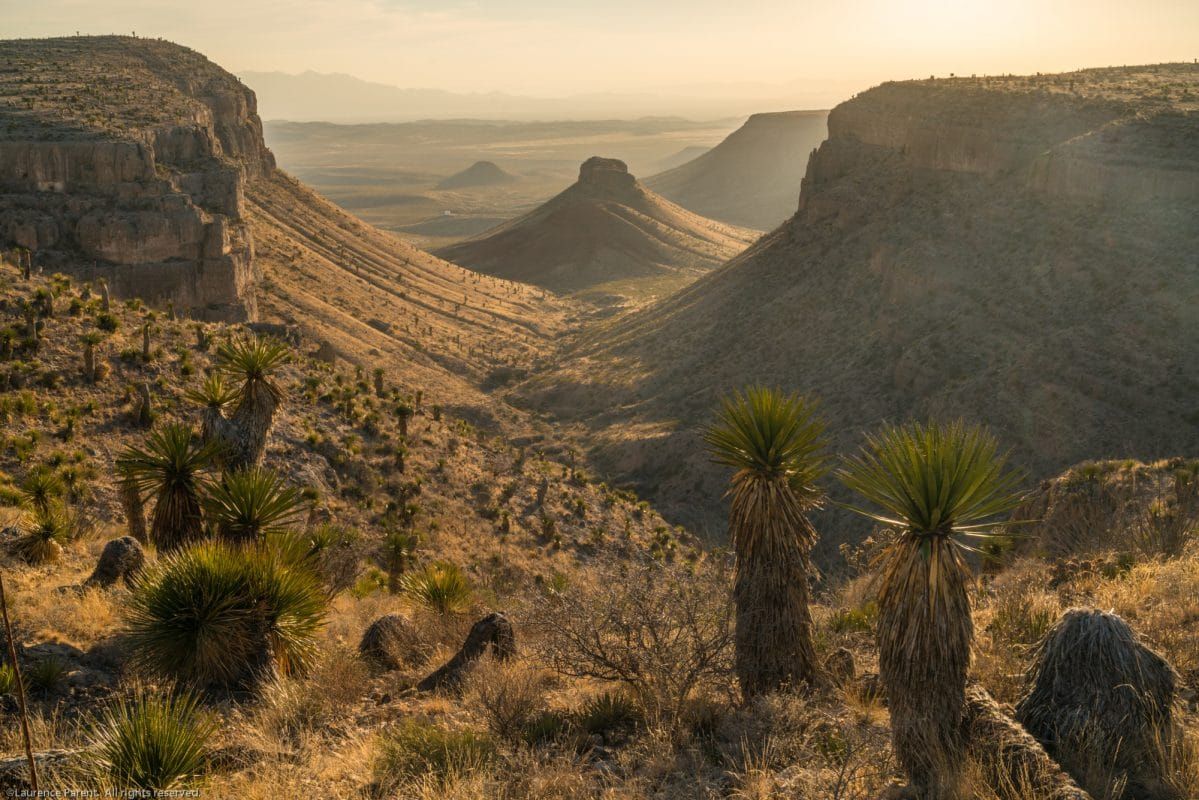
The first step in restoring a dry landscape may be learning to see what happens when it rains.
A dry creek bed can tell a story. So can a patch of bare ground, a stand of perennial grass, or a narrow line of sediment deposited against a fence.
These are not merely features of the landscape. They are evidence of how water moves through it.
Across the American West, landowners are experimenting with ways to restore degraded watersheds: contour-based earthworks, grazing management, small structures that slow runoff, and practices intended to improve soil cover and infiltration.
Some approaches are promising. Some are appropriate only under particular conditions. And some interventions can create new problems when applied without understanding the land.
Before asking what to build, dig, or change, a land manager should ask a more fundamental question:
What is the water already doing?
1. Follow the water before changing its course
Water does not move uniformly across a property.
It collects in depressions, follows slopes, encounters vegetation, and concentrates in channels. Some rainfall enters the soil. Some evaporates. Some moves across the surface, carrying sediment with it.
The pattern depends on rainfall intensity, soil characteristics, slope, vegetation, and the condition of the watershed.
That means two areas receiving the same storm can respond differently.
One may absorb much of the rainfall. Another may produce rapid runoff and erosion.
Before selecting a restoration technique, observe where water concentrates, where sediment accumulates, and where vegetation appears to retain moisture.
Look for signs of active erosion, including small channels, exposed roots, and sediment deposits.
These observations do not replace technical assessment. But they help identify the questions a restoration project needs to answer.
2. Start with the ground cover
The condition of the soil surface matters.
Bare, compacted, or disturbed ground may be more vulnerable to runoff and erosion, depending on the soil and storm conditions. Vegetation and plant litter can help protect the surface from raindrop impact and influence how water enters and moves through soil.
This relationship appears repeatedly in Pitchstone's archive.
At the Dixon Water Foundation's Mimms Ranch near Marfa, Texas, managers have used different grazing treatments to examine grassland recovery in a dry Chihuahuan Desert environment.
The archived account, Rotational Cattle Grazing to Restore Degraded Chihuahuan Desert Grasslands and Promote Watershed Health, describes changes in vegetation cover and reports observations of improved infiltration and reduced runoff under certain management conditions.
But it also emphasizes something more useful than a universal prescription: stocking density and recovery periods must be adjusted to local conditions.
A grazing approach suited to a wetter prairie may not be appropriate for a dry West Texas grassland.
The management principle is broader than grazing.
Before changing the shape of the land, consider whether the condition of its existing vegetation and soil cover is contributing to the problem.
Sometimes the first intervention is a change in management rather than an excavation.
3. Understand what mechanical restoration can—and cannot—tell us
Pitchstone's archive includes an example from Keyline Desert Ranch, documenting a soil-restoration project in northern Mexico.
The project combined contour-based channels with soil ripping along surveyed contours. The archived video description reports vegetation regrowth after approximately six inches of rainfall and shows treated and adjoining untreated areas.
It is an interesting field example.
But photographs or video taken after rainfall cannot, by themselves, establish how much improvement resulted from earthworks rather than rainfall, soil differences, grazing history, or other factors.
Nor does the example establish that the same approach would work elsewhere.
Mechanical treatments can alter runoff pathways, infiltration, erosion, and sediment movement. Their effects depend on site conditions and design.
Poorly placed interventions can concentrate flows or damage areas that were functioning adequately.
That is why contour work, channel modifications, and other earthmoving projects require careful site assessment. Work affecting drainage, streams, or flood-prone areas may also require engineering advice and regulatory review.
The goal is not to move dirt. The goal is to improve how the landscape functions.
Those are not necessarily the same thing.
4. Think beyond the property boundary
Water connects landscapes.
A decision that retains more moisture in one location may affect the timing or amount of water moving downstream.
Vegetation can influence infiltration, evapotranspiration, and local conditions, but those effects are not identical across geographic scales.
This is a central question in Beyond Scarcity: Can We Restore Vitality in a Drying West, originally written by Lesli Allison for On Land.
The article examines the complex relationships among vegetation, water availability, and climate. It also acknowledges that the scientific picture is incomplete.
An intervention that benefits soil moisture or vegetation locally should not automatically be described as increasing regional water supplies.
Likewise, improved ground cover does not guarantee greater streamflow.
For land managers, the practical lesson is to consider both the immediate project area and the larger watershed.
Where does the water originate? Where does it go? Who and what depend on it downstream?
A restoration project should be evaluated within that larger system.
5. Treat monitoring as part of the intervention
Restoration is not completed when construction ends or a grazing plan begins.
The land must respond.
At Mimms Ranch, the archived account describes vegetation surveys, point monitoring, and regular visual assessment. Managers adjust grazing pressure and recovery periods as conditions change.
That is an important model of adaptive management.
The same principle applies to mechanical restoration.
Before intervening, document existing conditions. Afterward, examine whether the intended changes actually occur.
Useful observations may include:
- Changes in bare ground and vegetation cover.
- New erosion or sediment deposition.
- The location and persistence of runoff pathways.
- Plant recovery after rainfall and drought.
- Unintended impacts on roads, channels, or neighboring areas.
Photographs taken from consistent locations can help document visible changes. More technical questions about infiltration, hydrology, or sediment transport may require formal measurements.
And monitoring must extend beyond a single successful rainfall event.
A practice that appears effective after one storm may perform differently during drought or unusually intense rainfall.
The question is not simply whether the land looks better.
Is the system becoming more resilient over time?
6. Five questions to ask before intervening
For a landowner considering watershed restoration, these questions provide a useful starting point:
Where does water currently concentrate?
Identify existing drainage paths, erosion features, and areas where runoff spreads or accumulates.
What is happening at the soil surface?
Examine ground cover, exposed soil, compaction indicators, and the condition of vegetation.
Could management changes help before earthmoving?
Consider whether grazing pressure, recovery periods, traffic, or other practices are contributing to the observed problem.
What might change downstream?
Think about neighboring properties, channels, roads, habitats, and existing water uses.
How will success be measured?
Decide what observations or measurements would demonstrate improvement—and what would indicate an unintended consequence.
These are diagnostic questions, not construction instructions. Significant earthworks or alterations to drainage require appropriate technical and regulatory evaluation.
The land is the test
There is no single technique that restores every degraded watershed.
Contour treatments, grazing adjustments, vegetation recovery, and small-scale water-retention projects may each have a role. Their usefulness depends on the conditions they are intended to change.
Pitchstone's archive repeatedly returns to a larger idea: soil, water, vegetation, animals, and human management operate together.
An intervention that addresses one part of that system without considering the others may fail—or simply move the problem elsewhere.
The most useful first step is therefore not necessarily a shovel, a machine, or a new structure.
It is careful observation.
Read the water. Understand the land. Then decide what needs to change.
Editorial disclosure: This article was developed by Pitchstone Waters as institutional editorial content, drawing on previously published material in the Pitchstone archive. It synthesizes documented examples and established management questions; it does not represent a new firsthand account or an article authored by Chris Gill.