
The Texas Elk Dispute Was Never Just About Elk
A long-running dispute over Texas elk offers a durable lesson: when a label controls management, the evidence behind it deserves examination.

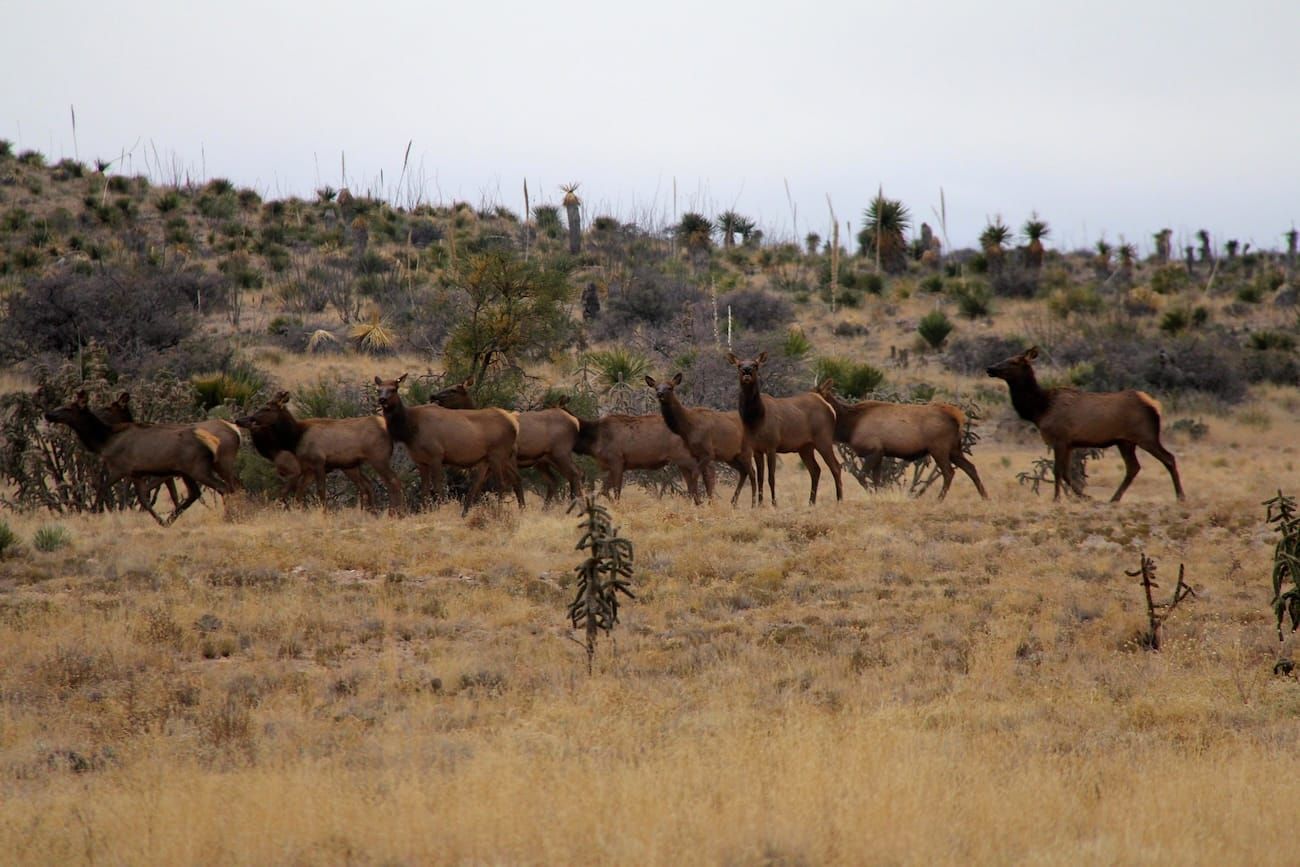
A long-running dispute over Texas elk offers a durable lesson: when a label controls management, the evidence behind the label deserves careful examination.
In 1997, Texas law classified free-ranging elk as exotic animals. That legal category carried practical consequences. Unlike game animals managed with seasons and bag limits, exotic animals could be taken year-round. On some state lands, policy sought to eliminate elk as competitors with desert bighorn sheep.
Pitchstone’s archive preserves a sustained challenge to the assumptions behind that treatment. The most substantial record is the 2016 paper “Are Elk Native to Texas? Historical and Archaeological Evidence for the Natural Occurrence of Elk in Texas”, by Richardson B. Gill, Christopher Gill, Reeda Peel, and Javier Vásquez, published in the Journal of Big Bend Studies. Pitchstone’s reproduction states that it is used with permission.
The paper assembled historical accounts, archaeological remains, antlers, possible coprolites, art, place names, and taxonomic evidence to argue that elk once occurred much more widely in Texas than a narrow account allowed.
Classification was doing the work of evidence
The dispute was not merely about what to call an animal. “Exotic” functioned as a management instruction.
That is the reason the archive remains useful. Categories can summarize knowledge, but they can also conceal the chain of reasoning between evidence and action. Once a species is placed in a disfavored class, removal may appear self-justifying. The central questions—what is known about history, what the animal is doing now, what objectives are being served, and what other consequences follow—can disappear.
Pitchstone recently restated this principle in Native, Exotic & Invasive Species: origin and classification matter, but they do not decide present ecological effect by themselves.
A strong case still needs boundaries
Rescuing the elk record does not require turning every archival claim into current fact. The 2016 paper is evidence in a policy dispute, not a substitute for present population monitoring, disease surveillance, habitat assessment, or analysis of competition with bighorn sheep.
Several propositions should remain distinct:
- Historical and archaeological evidence can establish that elk occurred in Texas.
- Legal classification determines how animals may be treated today.
- Current management still requires evidence about abundance, habitat, disease, competition, movement, and welfare.
- Protecting one valued species does not automatically justify eliminating another.
The archive is strongest when it forces those propositions back into view.
What the elk dispute teaches now
First, policy labels should be traceable to evidence. If a classification controls lethal management, landowners and the public should be able to inspect the historical, ecological, and legal basis for it.
Second, uncertainty should change the decision. Where evidence is incomplete, agencies should not present a contested assumption as settled science. They should state what is known, what is inferred, and what new information would alter management.
Third, wildlife should be managed as part of a community. Elk, bighorn sheep, predators, livestock, water, forage, disease, and people share the same landscape. Single-species objectives can create costs outside the frame.
Finally, management must remain accountable to outcomes. Reclassification alone would not answer every elk question. Neither does the exotic label. The proper test is whether a policy produces defensible ecological and ethical results under current conditions.
The rescued lesson is larger than elk: classification should begin inquiry, not end it.
Attribution and rights: This institutional synthesis links to and summarizes Pitchstone’s authorized reproduction of the 2016 Journal of Big Bend Studies paper. It does not claim new reporting, new field observations, or new authorship by Chris Gill.