
Initial Attack Failure: The East Evans Creek Fire and a Familiar Pattern
With wildfire, the conversation is shifting from suppression to prevention. This opinion piece argues that reducing fine fuels before ignition—rather than relying solely on firefighting after the fact—may be one of the most important challenges facing land managers in the American West.

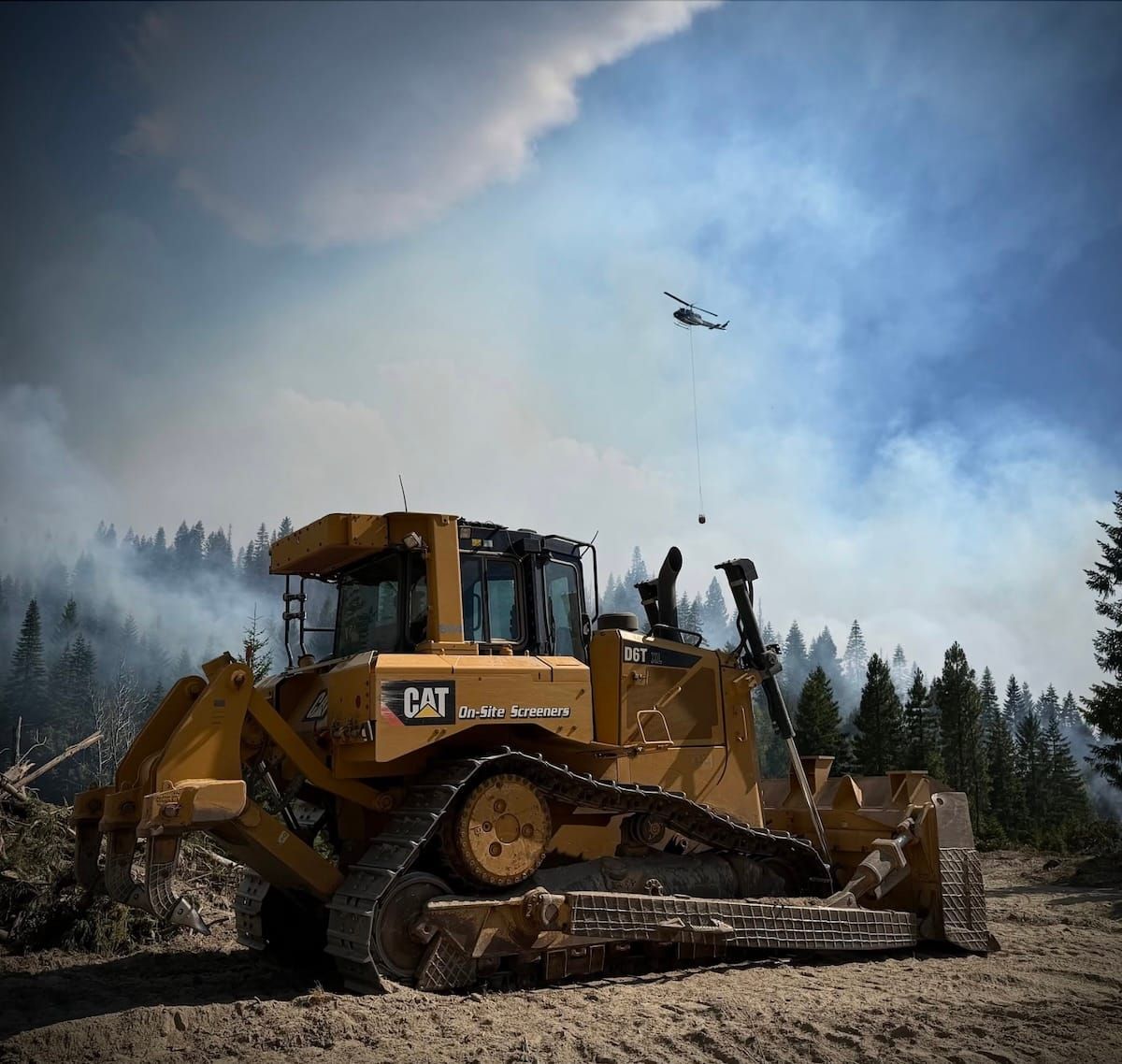
This article argues that America's wildfire crisis is as much a failure of prevention as it is of suppression. William E. Simpson II contends that mounting evidence linking wildfire smoke to significant public health and economic costs should prompt lawmakers to adopt proactive fuel-management strategies, including relocating federally managed wild horses into remote, wildfire-prone landscapes where they could reduce fine fuels through year-round grazing. Using the East Evans Creek Fire and the McKinney Fire as case studies, the piece maintains that delayed initial attack combined with excessive fuel accumulation has allowed small fires to become costly megafires.
Every megafire starts out as a campfire-sized problem. We can argue all day about weather, budgets, and politics, but none of those excuses changes the fact that landscapes overloaded with dry grass and brush are waiting for a spark. Whether one agrees with every part of this proposal or not, the larger point deserves attention: preventing catastrophic fires is almost always cheaper—and kinder to both people and wildlife—than fighting them after they've already exploded. Good stewardship isn't measured by how many helicopters you launch; it's measured by how few megafires you have to fight in the first place.
NOTE: this article was originally sent to us by email, via Captain William Simpson, founder of Wild Horse Fire Brigade
Dear Friends, Colleagues and Publisher/Editors:
The American People have a right to know what's going on with these wildfires. And frankly, truth is no longer in plain view, it is mired in the white noise of political and economic narratives.
We cannot control human behavior or the hand of God (lightening)... We CAN and must control fuels using the proven cost-negative plan that was first developed and proven effective in Siskiyou County, CA during the Klamathon Fire.
Insurance industry analyst-experts at AM BEST conducted the due diligence prior to financing and producing this 8-minute insurance industry video: www.ambest.com/video/video.aspx?s=1&rc=wildhorses323
It's well past time that legislators stop kicking the can down the road and making excuses and misrepresentations as to why they cannot implement the Wild Horse Fire Brigade Act of 2026, now in the hands of certain Congressional members.
These are the facts according to data from UCLA and the American Chemical Society ('ACS'):
- Novel toxins are now being formed in these new super hot wildfires (a function of fuel load) in the class of VOCs (ACS), previously unknown until Dec. 2025. www.sciencedaily.com/releases/2026/01/260107012114.htm
- Toxins in wildfire smoke are killing tens of thousands of innocent Americans prematurely every year (UCLA)
Dear Friends, Colleagues and Publisher/Editors:
The American People have a right to know what's going on with these wildfires. And frankly, truth is no longer in plain view, it is mired in the white noise of political and economic narratives.
We cannot control human behavior or the hand of God (lightening)... We CAN and must control fuels using the proven cost-negative plan that was first developed and proven effective in Siskiyou County, CA during the Klamathon Fire.
Insurance industry analyst-experts at AM BEST conducted the due diligence prior to financing and producing this 8-minute insurance industry video: https://www.ambest.com/video/video.aspx?s=1&rc=wildhorses323
It's well past time that legislators stop kicking the can down the road and making excuses and misrepresentations as to why they cannot implement the Wild Horse Fire Brigade Act of 2026, now in the hands of certain Congressional members.
These are the facts according to data from UCLA and the American Chemical Society ('ACS'):
1. Novel toxins are now being formed in these new super hot wildfires (a function of fuel load) in the class of VOCs (ACS), previously unknown until Dec. 2025. https://www.sciencedaily.com/releases/2026/01/260107012114.htm
2. Toxins in wildfire smoke are killing tens of thousands of innocent Americans prematurely every year (UCLA)
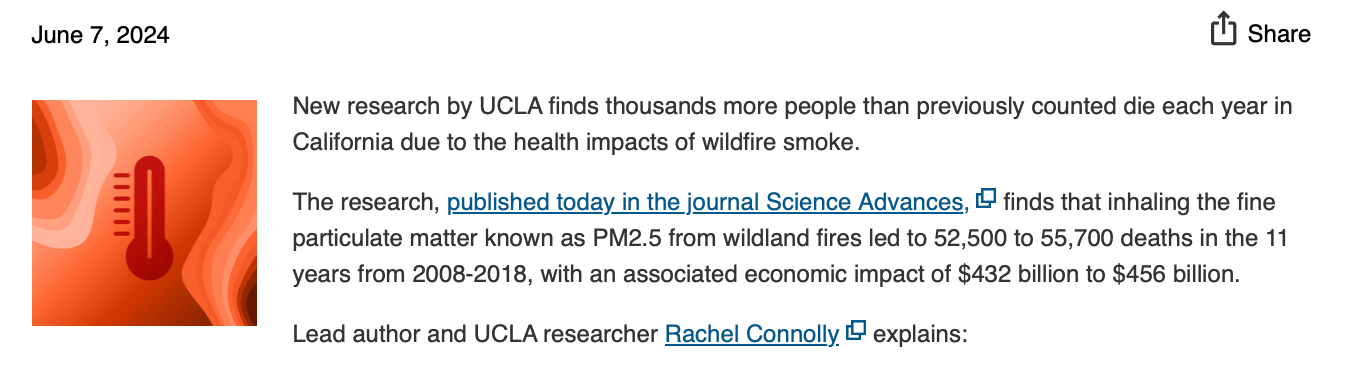
3. The estimated annual economic impact (based in the UCLA study of damages in CA alone) is $200-Billion/yr.
Deploying wild horses from Gov. holding and roundups into appropriate wilderness locations is urgently needed, and it's a cost-negative program for American taxpayers. The program also created more grazing permits on BLM lands for ranchers and enhances the biodiversity in appropriately utilized wilderness. Because wild horses are the only large bodied herbivore that effectively reseeds and fertilizes soils, post wildfire erosion and damage to fisheries and spawned fish eggs can also be mitigated. The environmental benefits 'mowing' the grass and brush with Nature's mowers is an economic windfall. I (William Simpson) began collaborating with people and Orgs in Spain and Portugal in 2018, and now, both countries are reporting success in major news stories with wildfire reductions and limited intensity. The model has been proven here in Siskiyou County and now in Europe.
Medford ABC News: https://www.kdrv.com/news/top-stories/more-wild-horses-equals-less-fire-fuels/article_f0c57e12-c70d-11ec-8cca-4b6fcee463b9.html
The only question remaining is: How many more Americans must die prematurely before lawmakers take action? How many more hundreds of $-billions must be wasted?
Initial Attack Failure: The East Evans Creek Fire and a Familiar Pattern
By: William E. Simpson II
In the narrated video recorded on the afternoon of July 10, 2026 (above), wild horse researcher and commercial helicopter pilot William Simpson documents the East Evans Creek Fire from a clear vantage point in the Sam's Valley area of Jackson County, Oregon. Roughly one hour after first observing the smoke plume — and more than an hour after the fire was reported to 911 — no aviation resources are visible. The fire, still relatively small at that stage, is already building a significant column under clear skies.
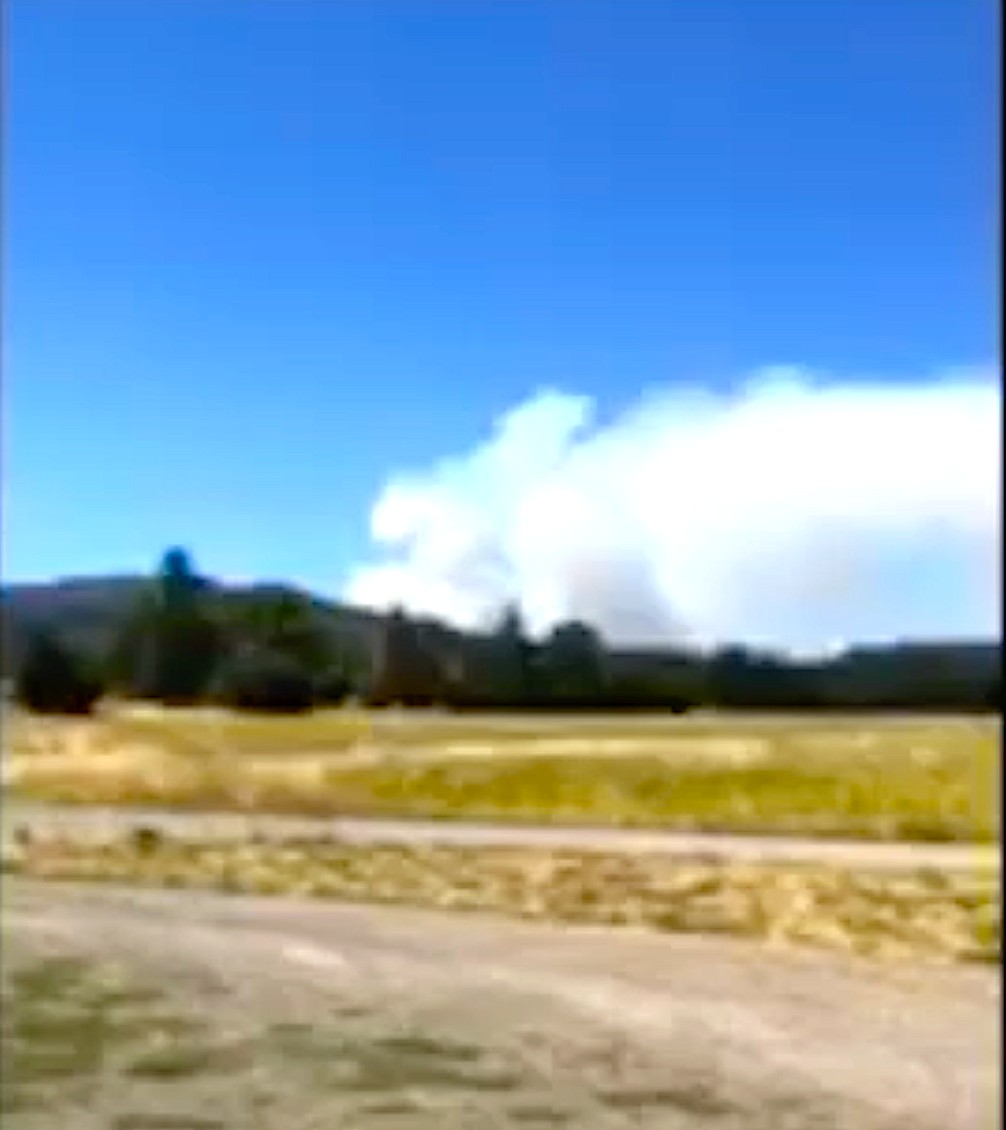
What followed is now a matter of public record: the fire exploded in size that same afternoon and evening, reaching approximately 1,550 acres by nightfall. Within days it grew into a multi-thousand-acre project fire that eventually exceeded 11,000 acres, triggered the Emergency Conflagration Act, forced widespread evacuations, and required massive state and mutual-aid resources.
This was not inevitable. It was a failure of initial attack — made far worse by the presence of unmanaged fine fuels.
The Facts of the East Evans Creek Fire
- Reported to 911 at 2:41 p.m. on July 10, 2026 after a vehicle struck a power pole and ignited dry vegetation. Notification was immediate and precise.
- Ignition occurred in an accessible area of Sams Valley, approximately 14 miles northeast of the town of Rogue River.
- Jackson County and the Oregon Department of Forestry Southwest District have access to local and regional aerial resources, including Type 1, 2, and 3 helicopters and air tankers.
- Standard wildfire doctrine prioritizes aggressive, rapid initial attack — especially with aviation — on new starts under high fire-danger conditions to keep fires small.
- By the time Simpson filmed, no aviation was visible from a clear vantage point, even while the fire remained relatively limited in size before its rapid expansion.
- The fire still grew explosively that same day under extreme heat, low humidity, wind, and steep terrain, escaping early containment and becoming a large, multi-day incident.
Initial attack success is measured by one clear metric: whether a new fire is contained or controlled while it is still small. Here, a reported fire in an accessible location with available aerial resources escaped that critical window. Even if ground engines arrived promptly and a helicopter was eventually ordered, the absence of effective aerial suppression during the first hour allowed the fire to gain unstoppable momentum. That outcome is the definition of an initial-attack failure.
The Critical Missing Element: Fuels Management
The explosive growth of the East Evans Creek Fire was not caused by the delayed aerial response alone. It was driven by the heavy accumulation of fine fuels — dry grass and brush — that allowed the fire to accelerate rapidly once it started.
Had a proper one-hour class fuels management plan, such as the Natural Wildfire Abatement and Forest Protection Plan developed by Wild Horse Fire Brigade, been previously implemented on this landscape, the intensity and rate of growth would have been significantly lessened. Even with a tardy initial aerial response, the fire would not have seen the same explosive expansion.
The rapid growth observed was a direct function of extensive, continuous grass and brush fuels. These are precisely the fine fuels that free-roaming wild horses, when properly deployed as keystone herbivores in appropriate densities, naturally reduce through year-round grazing. By keeping fine fuel loads lower and more discontinuous, wild horses create conditions in which new ignitions burn with lower intensity and slower rates of spread — buying critical time for ground and aerial resources to arrive and succeed.
In short: better pre-fire fuels management would have made the failure of the first-hour aerial response far less consequential.
A Familiar Pattern: The McKinney Fire Parallel
This is not an isolated event. A similar failure occurred with the McKinney Fire in Siskiyou County, California, on July 29, 2022. That fire also started small and exploded under extreme conditions, growing from dozens of acres to tens of thousands within hours, ultimately burning more than 60,000 acres, destroying 185 structures, and killing four civilians. In both cases, a reported fire escaped the initial-attack window and became a costly, destructive project fire. And in both cases, the presence of heavy fine fuels amplified the consequences of any delay in effective suppression.
Why This Matters
Every large wildfire begins as a small one. The difference between a 20-acre fire that is extinguished and a 10,000-acre project fire that destroys homes and forces evacuations is often decided in the first one to two hours — and by the fuel conditions that exist before the fire even starts.
When aviation resources are available, a fire is reported immediately, and the landscape still carries heavy loads of unmanaged grass and brush, the public has a right to expect both rapid initial attack and proactive fuels management that reduces the potential for explosive growth. When either element fails, the results are predictable and costly.
The East Evans Creek Fire is the latest example. The McKinney Fire was another. Until initial attack systems deliver rapid, decisive resources and land managers implement science-based fuels reduction — including the strategic use of wild horses as natural fuel managers — these failures will continue to repeat.
The video of the East Evans Creek Fire in its early stages is not just documentation of a wildfire. It is documentation of a system that failed to stop a small fire while it was still small, on a landscape where the fine fuels that drove its explosive growth could have been managed in advance.
That dual failure — of initial attack and of fuels management — deserves accountability, transparent review, and concrete change.
Wild Horse Fire Brigade
Advancing the Natural Wildfire Abatement and Forest Protection Plan — using free-roaming wild horses as keystone herbivores to reduce fine fuels and protect landscapes before the next fire starts.
Free Article by EPOCH TIMES: www.theepochtimes.com/artic...s1comp
=============================================================================
Capt. William E. Simpson II - USMM Ret.
Founder - Exec. Director - Wild Horse Fire Brigade
Ethologist - Author - Conservationist
Wild Horse Ranch
P.O. Bx. 202 - Yreka, CA 96097
Phone: 858. 212-5762
Wild Horse Fire Brigade (www.wildhorsefirebrigade.org/)
William E. Simpson II is an ethologist living among and studying free-roaming native species American wild horses. William is the award-winning producer of the micro-documentary film 'Wild Horses'. He is the author of a new Study about the behavioral ecology of wild horses, two published books and more than 500 published articles on subjects related to wild horses, wildlife, wildfire, and public land (forest) management. He has appeared on NBC NEWS, ABC NEWS, CBS NEWS, theDoveTV and has been a guest on numerous talk radio shows including the Lars Larson Show, the Bill Meyer Show, NPR Jefferson Public Radio and NPR National Radio, Global News, The Guardian, and AM BEST TV.
Check out William's Film Freeway account for films, studies, TV & radio interviews, and more HERE: https://filmfreeway.com/WilliamESimpsonII