Wyoming's Snake River Can't Quench Idaho's Thirst
No matter how much snow or rain falls each year, demand exceeds supply.

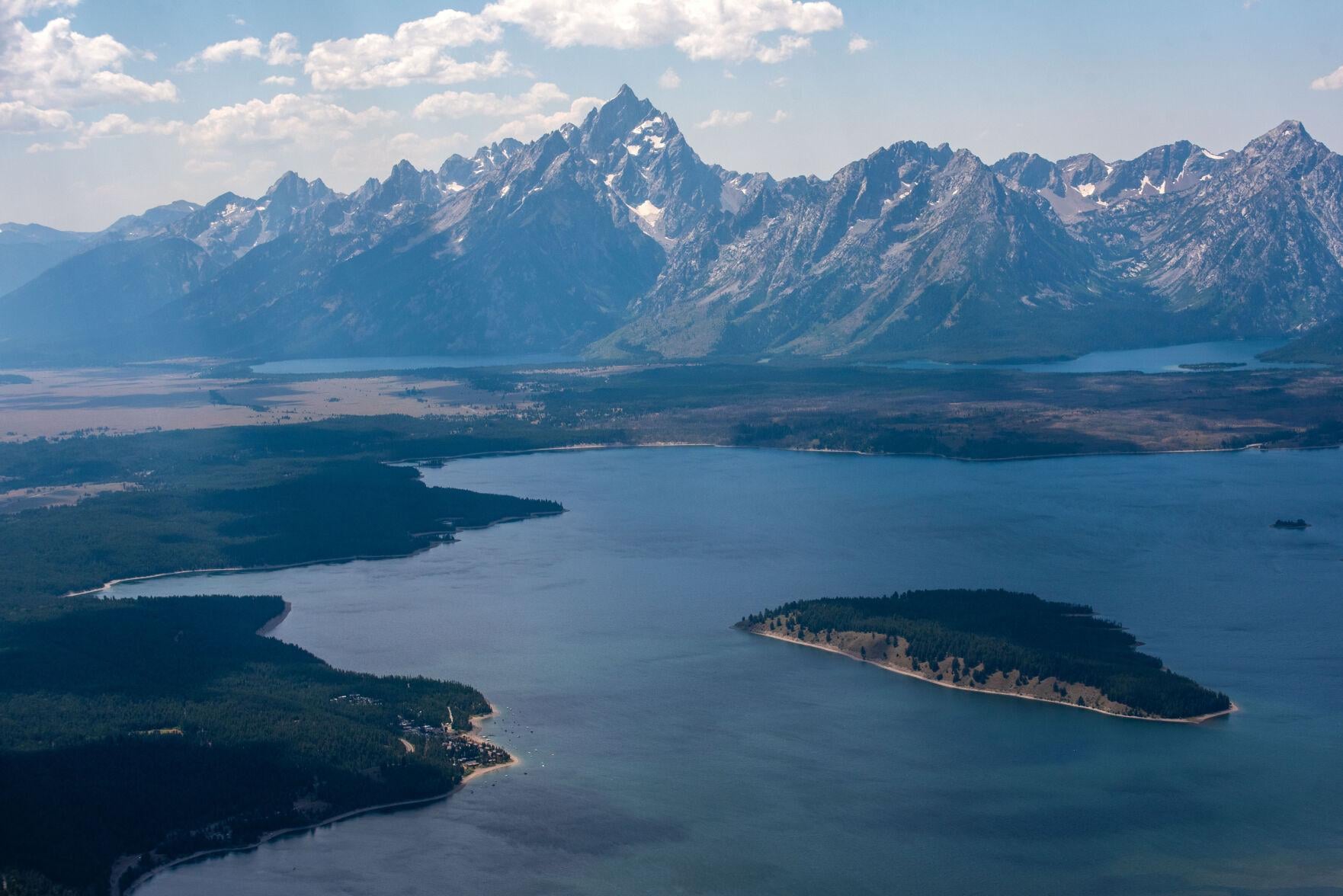
You can fill every reservoir in the Upper Snake Basin and still not have enough water to satisfy everyone. That's the hard reality of Western water law, where century-old irrigation rights, growing demand, climate change, shrinking reservoir capacity, and ecological needs are all competing for the same finite resource. The recent fight over Jackson Lake Dam—where proposed releases nearly dropped low enough to damage the Snake River through Grand Teton National Park—shows that even in a good snow year, the West's water problems are becoming increasingly about management and competing priorities rather than simply how much snow falls.
NOTE: this article was originally published to JHNewsandGuide.com. It was written by Jim Stanford. Photography by Bradly J. Boner.
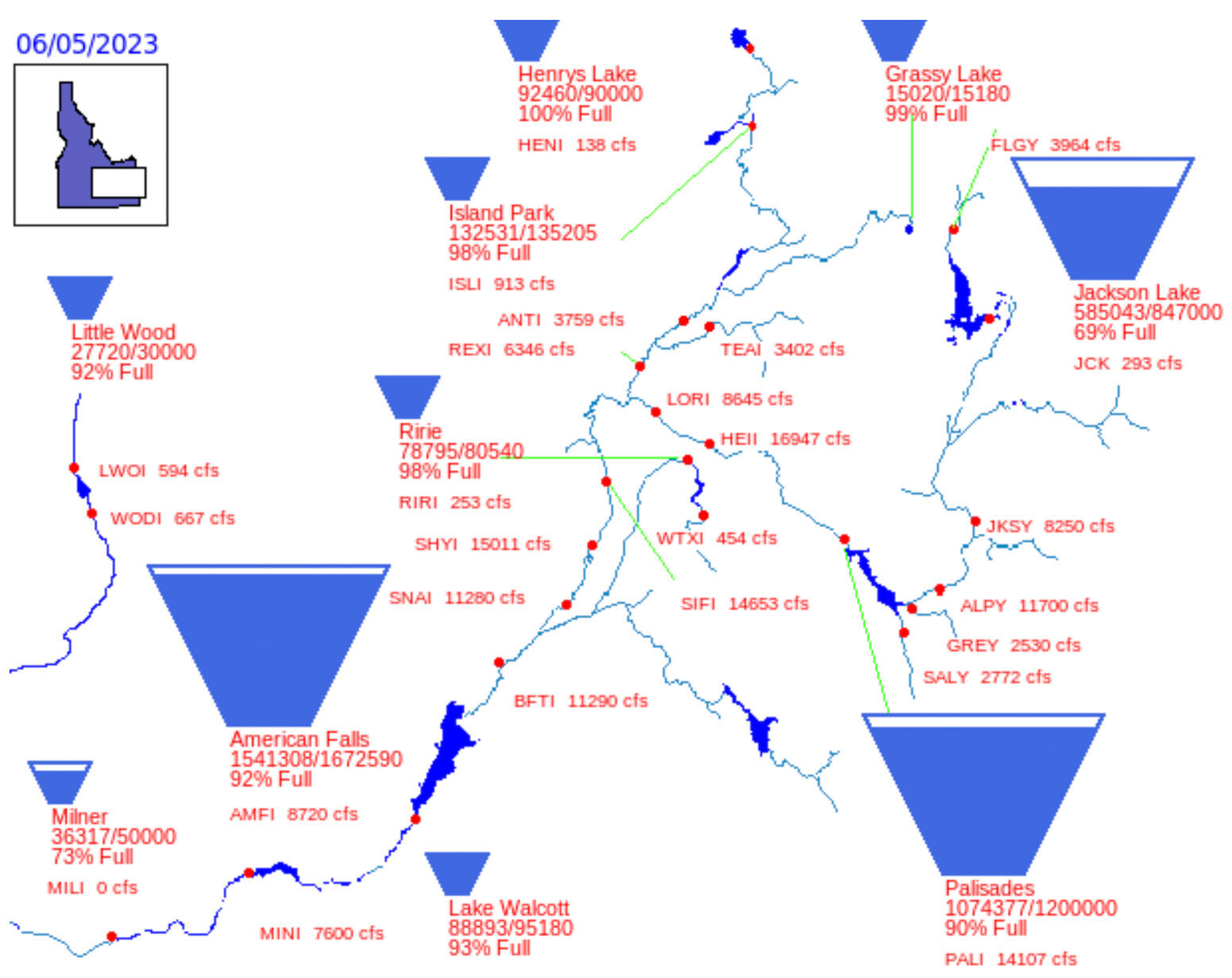
Federal water managers expect to fill or nearly fill the Jackson Lake reservoir by July 4.
Farther downstream, Palisades Reservoir, about 50% larger than Jackson Lake, will fill in late June. American Falls Reservoir, just west of Pocatello, Idaho, and twice the size of Jackson Lake, could reach capacity in little more than a week.
Together the three largest reservoirs in the Upper Snake River Basin hold more than 3.7 million acre-feet of water — enough to cover an area greater than the state of Connecticut a foot deep. At the end of the irrigation season in October, there will be water remaining in each reservoir, at levels much closer to normal after two years of drought.
So why, after a cold and snowy winter that has dam operators managing for flood risk in Idaho, did the U.S. Bureau of Reclamation propose a drastic reduction in the release of water from Jackson Lake Dam, prompting a fierce backlash? And why are Idaho officials already planning to curtail irrigation use?
Like with the drought-starved Colorado River that has garnered much national attention of late, there simply isn’t enough water in the Snake River to meet all of the demands.
“It’s never easy,” said Tony Olenichak, watermaster for Water District 1 in Idaho Falls. “There’s always someone running out of water, no matter how good a water year it is.”
That was nearly the case this spring at the iconic Oxbow Bend of the Snake in Grand Teton National Park, after the bureau proposed cutting the dam release to a trickle of 50 cubic feet per second — about one-sixth the minimum flow needed to sustain fish and other aquatic wildlife. Only several weeks of intense negotiations among federal and state officials, reaching the highest levels of the Interior Department, staved off the crisis and averted the Oxbow drying up into mud flats.
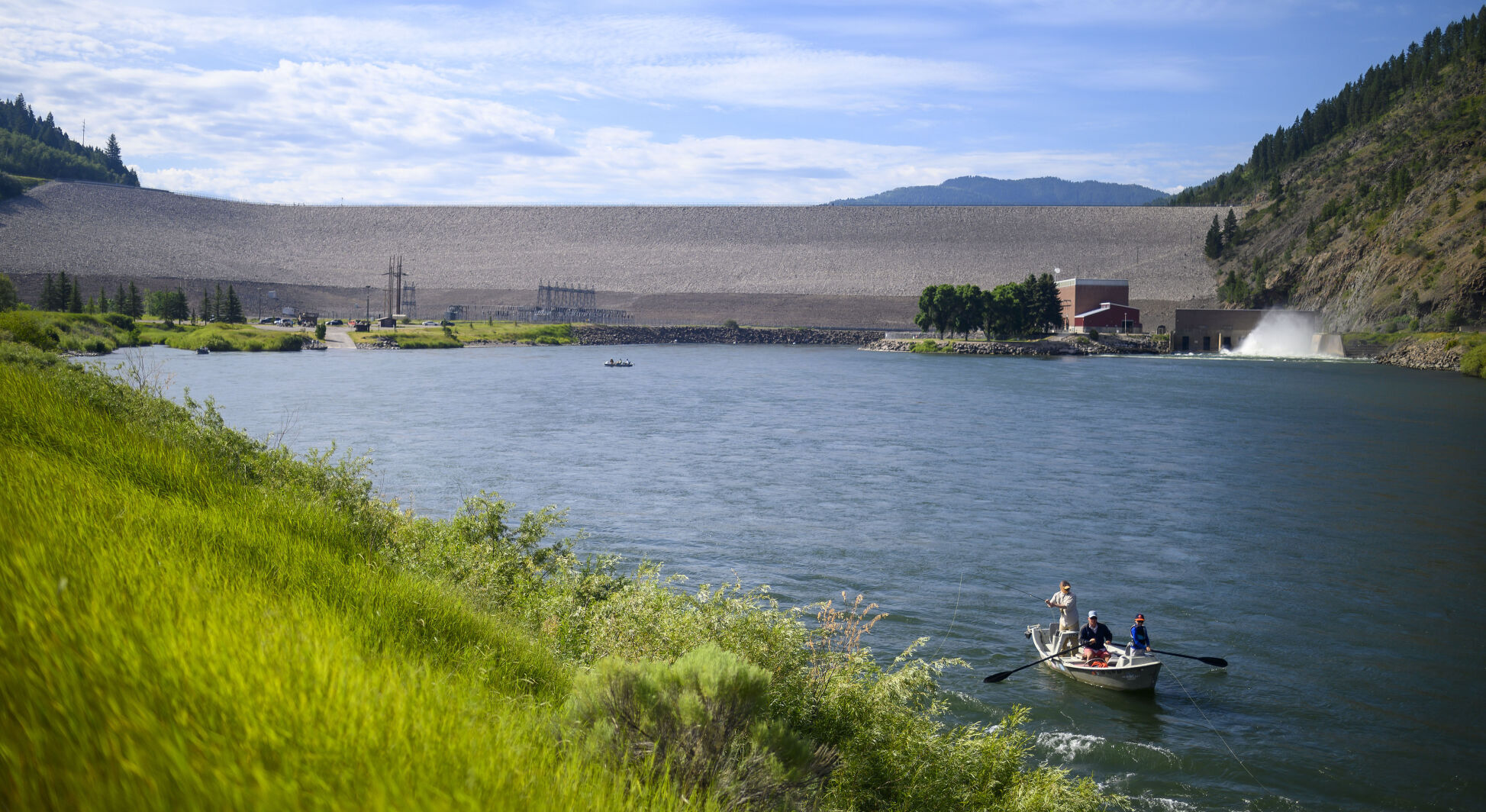

The bureau proposed the move to conserve storage for users in Idaho to whom it is contracted to deliver water. Brian Stevens, the agency’s operations manager in Burley, Idaho, said filling all reservoirs this spring won’t be enough. The three largest must be full simultaneously, and ideally for several days, to ensure that all irrigators with rights to the stored water will get their full allotment.
But even then, irrigators who pump groundwater from wells are facing a “severe curtailment” this summer, Stevens said, as the Idaho Department of Water Resources recently gave notice that water flow could be reduced for tens of thousands of farmers tending nearly a million acres in the southeastern portion of the state. Groundwater is needed to recharge the river flow after surface water is diverted.
“That will put people’s neighbors in dire straits, even more than they are now,” Stevens said. “The value of water keeps going up, up and up, and there’s no shortage of people wanting water.”
As with the Colorado — whose main stem, the Green River, begins roughly 60 miles southeast of Jackson in the Wind River Range — climate change is exacerbating the problem. With warmer temperatures, dryer soils absorb more water, reducing the amount of runoff in streams. More precipitation is falling as rain instead of snow, so runoff is occurring earlier and leaving less water for later in the year. More water also evaporates in the heat.
At the same time, reservoirs constructed along the upper Snake as early as 1906 and as late as 1957 slowly have been filling up with silt, reducing their capacity to store water.
Skies hazy with smoke from the Calgary wildfires provided a fitting backdrop May 18, when the bureau held its annual operations meeting at Teton County Library and faced withering criticism from anglers, river runners and other interested citizens for the anemic dam release.
The previous week, the Interior Department — which oversees the Bureau of Reclamation and National Park Service — brokered a deal with the states of Wyoming and Idaho to maintain a minimum release of 280 cfs from Jackson Lake Dam. The bureau would rent water from Idaho, if necessary, after Wyoming’s allotted storage is used up. Still, that flow is only a fraction of what the release usually would be at this time of year.
The Wyoming Game and Fish Department, State Engineer’s Office and Wyoming’s congressional delegation, particularly U.S. Sen. John Barrasso’s staff, were heavily involved in the discussions. Teton County, Trout Unlimited and other river advocacy groups also weighed in.
Grand Teton Superintendent Chip Jenkins had raised the issue with Park Service brass in Washington, D.C., and coincidentally attended a wildlife connectivity and migration conference with Interior Deputy Director Tommy Beaudreau. Jenkins discussed the Snake with Beaudreau, who had just helped broker a multi-state deal to reduce water consumption along the Colorado.
“It’s really good news that there’s a short-term solution,” Jenkins said of the minimum release from Jackson Lake Dam. But there is an ongoing conversation at the federal level about “the need to put some sort of a more structured framework in place,” he said, to ensure the various agencies coordinate, particularly when there is staff turnover.
During the public meeting in Jackson, fishing guide Dave Ellerstein cited the retirement of longtime operations manager Mike Beus, with Stevens taking over as his replacement, as coinciding with more erratic management of Jackson Lake Dam.
“It seems like the math is not taking into account the environmental factors over the past few years that, for over a 20-year span, you guys were [able] to work out,” Ellerstein said, drawing murmurs of assent among the crowd of about 60. “What’s the difference? Why is the environment not being taken into account?”
Lanie Paquin, area manager for the bureau’s Boise office, acknowledged a loss of experience and institutional knowledge with Beus’ departure, saying the agency has “new players” and “We’re all learning.”
Scott Bosse, Northern Rockies regional director for American Rivers, said in an interview following the meeting that the bureau averted a worst-case scenario this spring. “But the outcome is nowhere close to a best-case scenario,” he said. “Flows should be 10 times higher than they are right now, for this time of year.”
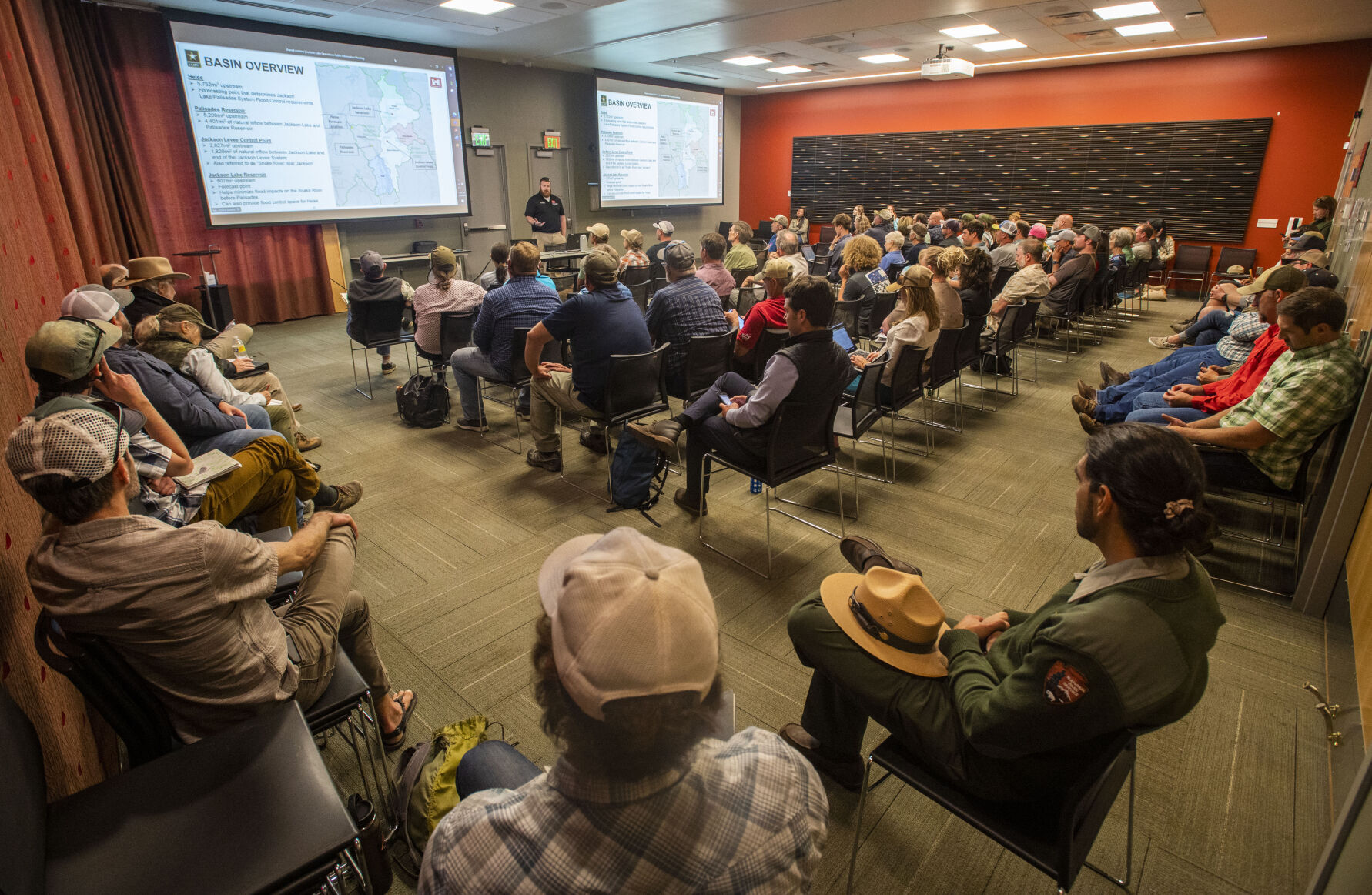

Bosse, who traveled from Bozeman, Montana, for the meeting, credited the Jackson Hole community for turning out and reminding the bureau, “The Snake River in Wyoming is not an irrigation ditch.”
He also applauded the bureau and particularly Paquin, who took responsibility for the situation. “I think they heard loud and clear from the community what it expects in the future, and I think they listened well. It makes me think they’re going to try to do a better job in future years.”
In an interview, fishing guide Ellerstein questioned the bureau’s accounting of water rights in the reservoir system, saying there have been plenty of years with less water, “and still they didn’t have to kill off the river in Grand Teton National Park.”
He added, “From a common-sense standpoint, if all reservoirs are going to fill, there should be water for everyone, and there shouldn’t be a panic about it.”
Olenichak sees the situation differently from his vantage point in Idaho Falls, where as an elected watermaster he oversees 359 canal or pump diversions in the Snake basin. Irrigators with senior water rights — dating to the late 1800s or early 1900s — likely will receive their full allocations this year, but holders of junior rights obtained more recently will not.
“We don’t have enough water for everyone as it stands right now,” he said last week by phone. With warm and dry weather this spring, the once-robust snowpack is “quickly going away,” he said.
Irrigators who pump groundwater have junior rights, which is why many are facing curtailment. Other junior holders are those with rights to divert some of the natural flow of the river, excluding reservoir storage. By mid-summer, all of the natural flow is used up by the time the Snake reaches Blackfoot, so those irrigators are curtailed most years.
Another junior rights holder is the State of Wyoming, which negotiated the purchase of 33,000 acre-feet of flexible storage in Palisades following severe drought years and meager dam releases in the late 1980s.

Olenichak has spent 35 years in water management, including 33 with Idaho District 1. He was a hydrologist and program manager for the district prior to being elected by the membership four years ago.
He grew up on the East Coast, and the first time he came out West and saw the Snake River channel dry below Milner Dam — where the bureau often releases no water at all — “I was amazed,” he said. He thought it was “such a tragedy” and asked, “How is that possible?”
Then he studied watershed science at Utah State and learned about water law, including the “doctrine of prior appropriation” that governs the use of water in Idaho and Wyoming. Under this bedrock of Western water law, the first people to put the water to “beneficial use” gained the first rights.
Early Idaho farmers took every last drop of water from the Snake basin they could. “There was nothing to stop them from drying up the whole stream,” Olenichak said.
This is the law and the system “we’re stuck with,” he said. “If we had a socialized system and everyone shared alike and no one got shut off until everyone got shut off, that system would work differently.”
The bureau’s Stevens likened the complex accounting system for water allocations to a savings account. A farmer who doesn’t use the full allotment in a year expects to see a balance in his or her account — assuming the reservoirs fill to capacity. Because the irrigators have a contract with the bureau to deliver water, they expect someone to account for every drop.
That’s what led to the conflict this spring. If dam managers had released more from Jackson Lake and allowed water to spill past Milner Dam, below American Falls, that water would pass out of the system and not be available for use. Irrigators expected someone to pay for that water — and the State of Wyoming had only 20,000 acre-feet in its account, owing to drought-drained reservoirs the last two years and junior rights to be filled.
Stevens said this spring saw a rare confluence of factors, including the amount of storage heading into the season, the rate at which American Falls filled faster than the depleted Jackson Lake and federal guidelines for flood control at Palisades.
The last time the agency released so little water from Jackson Lake Dam in spring was in 1989, when as late as July 12 the release was only 368 cfs. In the last 50 years, the lowest spring release was 78 cfs on April 20, 1981.
Approved by Congress and signed by both states, the Snake River Compact of 1949 gave Idaho 96% of the water in the Snake River and Wyoming 4% — or 200,000 acre feet, according to guidelines the bureau adopted in 1996 for management of Wyoming’s allocation in Palisades.
How do those numbers figure into the current Bureau of Reclamation accounting system?
“We don’t compute that,” Stevens said. “In our water rights accounting, it’s not accounted for.”
The 200,000 acre-feet likely is a reference to surface rights, not storage, and “about who can use the water,” Stevens said, alluding to irrigation diversions in Wyoming. He conceded that a lawyer might argue differently.
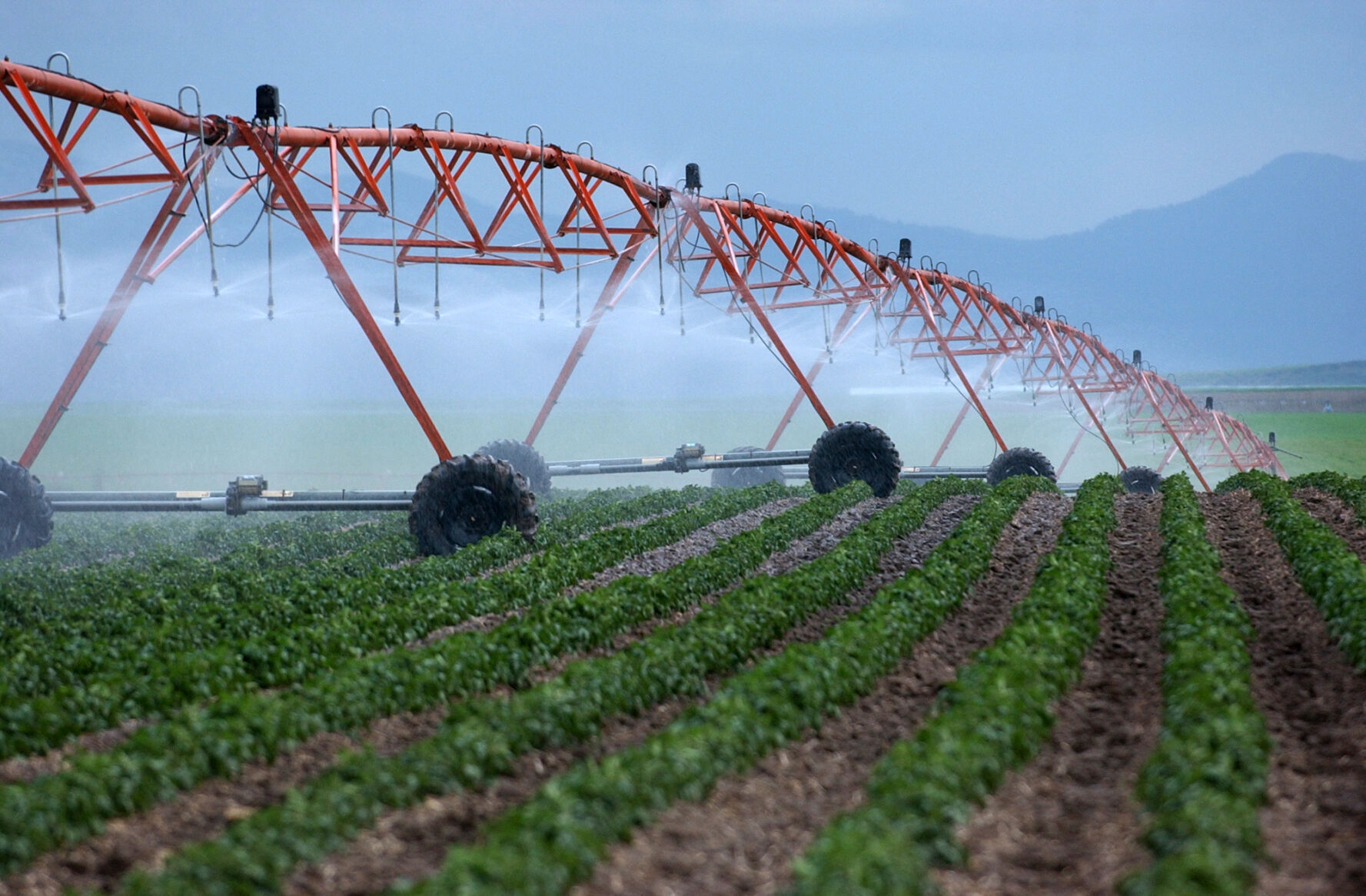
The compact excludes reservoir storage with pre-existing water rights. Besides the Jackson Lake Dam release, the Snake in Wyoming receives water from dozens of tributaries, including the Gros Ventre and Hoback rivers. Irrigators can draw from the substantial quantity of that water.
Jeff Cowley, administrator for interstate streams at the Wyoming State Engineer’s Office, could not be reached for comment and, owing to the sensitive nature of the recent negotiations, steered inquiries to State Engineer Brandon Gebhart. Gebhart did not respond to phone and email messages by press time.
Stakeholders in the river community have suggested in recent weeks that perhaps Teton County, the state or another entity could purchase additional water from Idaho rights holders to augment flows in the Snake when necessary.
Luther Propst, chair of the county commission, called for better management guidelines to protect the health of the Snake in Grand Teton park, particularly for expected “periods of scarcity” in the years ahead. He also alluded to sharp cuts in dam releases in the fall that can strand fish in side channels, another sore spot for anglers in recent years.
“I reject the idea that we need to be renting water,” Propst said. “It’s the public’s water, and there need to be minimum ecological sideboards, for a certain amount of water and the pace of the drawdown, provided for the public interest.
“Nevertheless, if we must rent water, I certainly support looking into how we might do so,” he said.
One possible solution — supported by Idaho irrigators as well as Jackson Hole river runners — would be for the bureau to release additional water from Jackson Lake and count it toward federally mandated flow augmentation for endangered salmon and steelhead in the lower Snake. The bureau is required to send an additional 150,000 acre-feet of water from the upper basin downstream to help salmon each year, but the federal government has resisted counting the minimum Jackson Lake release in that sum.
American Rivers’ Bosse called climate change and salmon flow augmentation the “two elephants in the room” in the Snake water discussion. He said Paquin, the bureau’s manager in Boise, seems open to the idea of using Jackson Lake water to help fish on the brink of extinction, while at the same time benefiting Teton park’s riparian ecology.
Given the “two elephants,” Bosse said, “these decisions are going to become even more difficult in the years to come.”
Diana Miller, fisheries biologist for Wyoming Game and Fish, said despite the recent settlement she remains nervous about the future. “We’ll continue to have conflicts because we’re not out of the drought yet, and who knows when and if we will be,” she said. “Weather patterns are changing enough that it’s hard to look ahead at what’s going to happen.”
Park Superintendent Jenkins cited recent and ongoing studies among federal agencies and University of Wyoming researchers. After a multi-agency climate assessmentindicated smaller snowpacks in the future in the Greater Yellowstone, the university recently received a five-year, $20 million grant from the National Science Foundation to study climate-driven changes to the state’s water supply.
“Taking this emerging science together with hopefully a framework for better collaboration on the upper Snake can show us where we’re headed in the next 10, 20, 30 years,” Jenkins said. “Collectively and collaboratively we can start thinking about what the solutions look like.”
— Billy Arnold contributed to this story.
— This article has been updated to reflect that the main stem of the Colorado, the Green River, begins in Wyoming, and that the Snake River Compact excludes pre-existing storage rights and pertains to natural flows.
