What the Ruins Teach
Abandoned land does not stand still. Three landscapes show when nature can recover on its own—and when real restoration requires people to remove what is holding it back.

Land does not stand still merely because people walk away.
Rooflines collapse. Roots open pavement. Shrubs fill doorways. Trees rise where machinery once ran. The photographs are often captioned as nature “taking back” an abandoned place.
That description is satisfying. It is also incomplete.
What returns after people leave depends on what they changed, what remains, and whether the basic processes of soil, water and biological succession still work. Sometimes recovery needs little more than time. Sometimes time alone simply conceals the damage.
A town disappears into the forest
At Aral, Michigan, near Lake Michigan, a steam-powered sawmill began operating in the 1880s. Houses, stores, barns and a 90-foot dock followed. Ships carried away the white pine that had drawn people there.
When the surrounding timber was exhausted, the reason for the town disappeared. Aral was abandoned. Today, the National Park Service says, only a few traces remain beneath a returning forest.
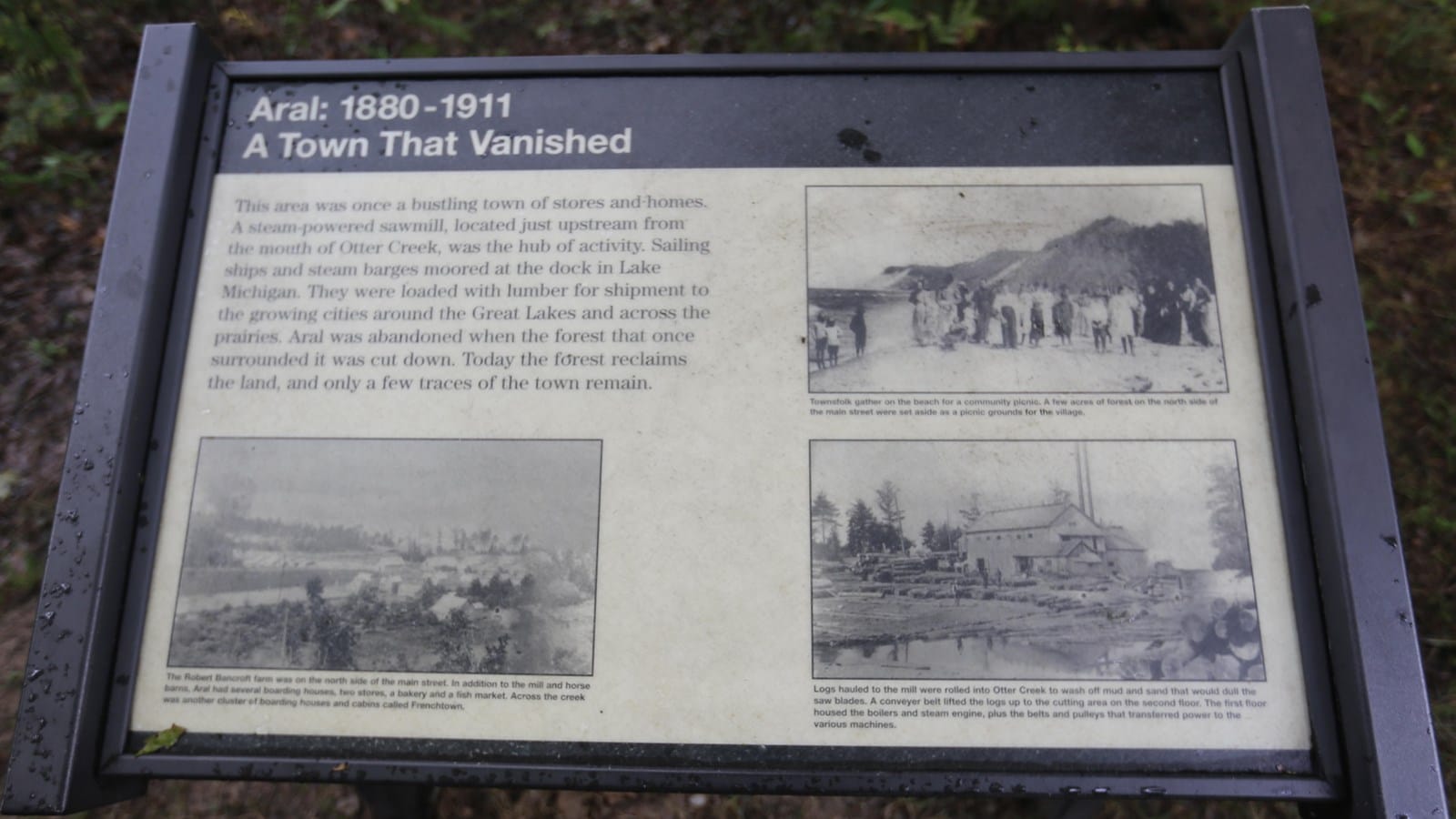
That is natural succession in its most legible form. Remove the saws, livestock, plows and repeated disturbance, and plants begin sorting the site according to seed supply, moisture, soils and competition. The result can eventually look inevitable. It was not. It emerged from a long sequence of small biological events.
Stone walls inside a hundred-year-old forest
The woods around Concord, Massachusetts, tell a similar story at a much larger scale.
According to the National Park Service, forest covered roughly 90 percent of Concord in 1635. By the middle of the nineteenth century, after generations of clearing for farms, fuel and lumber, forest cover had fallen to about 10 percent.
Then agriculture shifted west, coal replaced much household firewood, and abandoned fields began growing trees.
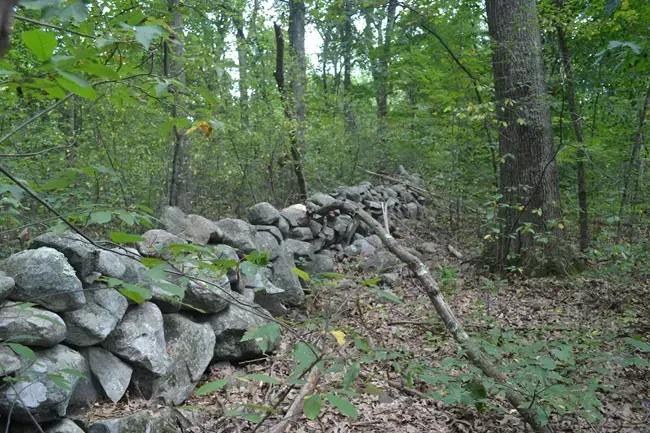
White pine colonized first. Hardwoods became established beneath it. Over more than a century, forests of different ages and species developed. Today an old stone wall running through the woods may be the clearest evidence that the land was once open pasture.
But the returning forest is not a copy of the forest that preceded settlement. The park reports persistent invasive plants, urban pressures and missing animals. Elk, moose and wolves did not return simply because trees did.
This is an important correction to the romance of abandonment: vegetation can return without restoring every relationship that once made the system whole.
Where nature needed a great deal of help
Krejci Dump, in Ohio’s Cuyahoga Valley, offers the harder lesson.
The 50-acre site operated as a salvage yard and waste dump from 1948 to 1980. Hazardous material was buried in unlined pits. By the time the National Park Service acquired the land in 1985, contamination had damaged soil, groundwater, wetlands, plants and wildlife.
Walking away would not have healed it.
The cleanup lasted decades. The Park Service reports that responsible parties ultimately paid more than $50 million to investigate the damage, remove contaminated material and restore the property. The agency certified the work as complete in 2020. Native vegetation, wet meadows and marshes now occupy ground that once held scrap and toxic waste.
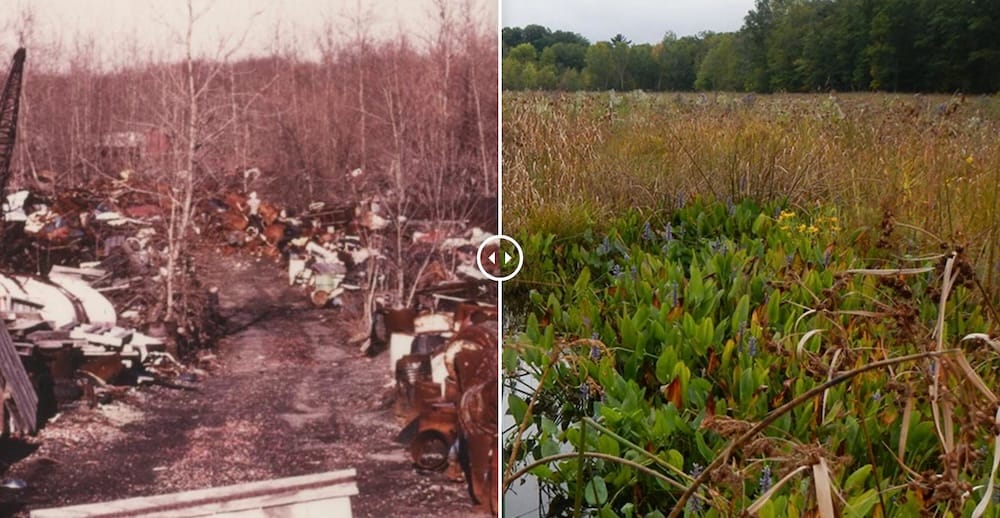
The photographs are dramatic: rusted drums and debris in one frame; grasses and wetlands in the next. But the green “after” photograph does not show nature erasing human damage by itself. It shows natural processes recovering after people removed the conditions preventing recovery.
Green is not the same as healthy
These places suggest three different outcomes.
At Aral, ending the disturbance allowed forest to obscure a vanished town. At Concord, succession rebuilt extensive woodland, but not the precise ecological community that existed before clearing. At Krejci, passive recovery was not a serious option until contamination was removed and habitat was deliberately reconstructed.
The same distinction applies on working land.
An idle field may develop diverse perennial cover—or become dominated by one aggressive plant. A neglected channel may catch sediment and reconnect with its floodplain—or continue cutting downward. Brush may protect soil in one place and suppress grasses or alter water availability in another.
A photograph can show that a place is changing. It cannot, by itself, tell us whether water infiltration is improving, whether erosion has stopped, whether desirable plants are replacing undesirable ones, or whether wildlife habitat is becoming more functional.
Those questions require observation and measurement.
The lesson is not to leave
The lesson of these ruins is not that people are the problem and nature succeeds only in our absence. At Krejci, people caused the damage—and people had to do the difficult work that allowed recovery to begin. At Concord, centuries of changing human use helped determine both the forest that disappeared and the forest that returned.
Good stewardship is not total control. Nor is it neglect dressed up as faith in nature.
It means identifying what process is broken. Stop the disturbance that prevents recovery. Remove a lasting obstacle when necessary. Restore the movement of water, the protection of soil and the opportunity for plants and animals to respond. Then watch what actually happens.
Nature always moves. The responsible question is not whether we should control every change or simply stand aside. It is whether our actions leave the land better able to repair itself.
Editorial note: This is a Pitchstone Waters institutional editorial developed with AI assistance under human direction. It draws on Chris Gill’s published work and Pitchstone’s documented principles, but it is not presented as a new article written by Chris Gill.
