Report On The Ineffectiveness Of Forest Wildfire Mitigation Measures: Insights From The Bootleg Fire And Scientific Principles
If we truly want less wildfires and toxic smoke, we need to embrace the hard truths that are arguably being suppressed for the sake of wildfire profiteers


"The biggest cause of increased wildfire is not enough animals in forests.
NOTE: this article was sent to us and reposted with permission, via William E. Simpson II
Executive Summary
This report provides a synthesis based on fundamental scientific principles of fire behavior, particularly the fire triangle (fuel, oxygen, and heat), which governs combustion chemistry and energy release in wildfires.
While the original analysis from the Los Padres ForestWatch article on the 2021 Bootleg Fire highlighted failures of mitigation measures like thinning, prescribed fire, and fuel breaks, it and quoted experts inaccurately emphasized weather and climate as primary drivers without acknowledging that only combustible fuels (such as grass, brush, and understory vegetation) provide the material necessary for fire ignition and sustenance.
Wind and climate do not supply fuel; they influence fire spread and intensity by affecting oxygen supply, fuel moisture, and ignition conditions, but without sufficient fuel, no fire can occur or release significant heat energy per physics and thermodynamics.
Key findings reaffirm mitigation inefficacy in the Bootleg Fire, where treated areas burned rapidly due to inadequate fuel reduction, but stress that true effectiveness requires comprehensive fuel management to prevent accumulation and regrowth.
This update incorporates the critical role of natural herbivory by deer, elk, and wild horses in managing fine fuels (1-hour fuels like grass and brush) on a continuous, landscape-scale basis, including in areas inaccessible to human methods. Population declines in these herbivores—such as California's deer dropping from a peak of about 2 million to around 450,000-500,000 over recent decades, and similar reductions in cervids and wild horses in adjacent states—have contributed to fuel buildup and more intense wildfires, as evidenced by scientific studies.
Recommendations prioritize targeted fuel reduction near communities, alongside home hardening and efforts to restore herbivore populations, over broad-scale interventions that may inadvertently increase fine fuels.
Introduction: The Bootleg Fire Context and Scientific Corrections
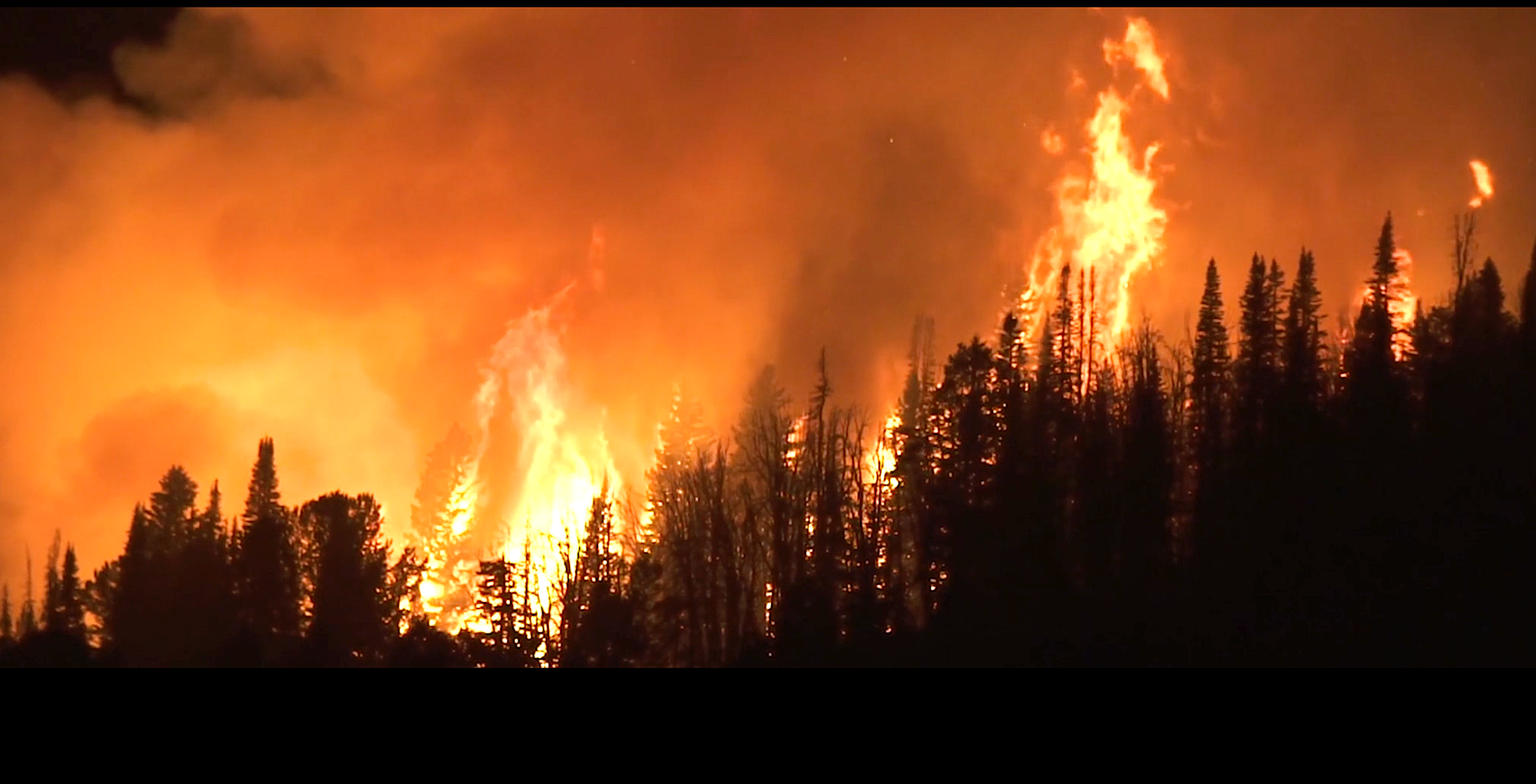
The Bootleg Fire, starting July 6, 2021, in southern Oregon's Fremont-Winema National Forest and merging with the Log Fire on July 19, burned approximately 413,765 acres. The Los Padres ForestWatch analysis documented rapid spread through tens of thousands of acres treated with thinning, prescribed fire, fuel breaks, and other management under projects like the 2012 Black Hills and 2018 East Hills initiatives. Despite these, the fire exhibited extreme behavior, growing to 200,000 acres quickly.
However, the article's attribution of fire drivers primarily to wind, hot-dry conditions, and climate change overlooks core wildfire science. The fire triangle requires fuel (combustible material like vegetation), oxygen (from air), and heat (ignition source) for combustion; without fuel, no chemical reaction releases energy. Wind supplies oxygen and spreads embers but does not create fuel; it accelerates spread by preheating and drying existing fuels. Climate change exacerbates fuel aridity through hotter, drier conditions, lengthening fire seasons and increasing lightning ignitions, but it does not generate fuel—it modifies the flammability of existing vegetation. Statements in the article suggesting fires are driven mainly by weather and climate, not fuels, conflict with evidence that fuel load and continuity are critical for intensity and spread. Dense forests can retain moisture, but excessive understory fuels (grass, brush) enable high-severity burns when ignited.
Broader evidence balances perspectives: While weather modulates behavior, fuel management is essential, as untreated fuel accumulation from fire suppression has heightened risks.
Ineffectiveness of Cited Mitigation Measures
Mitigation strategies aim to reduce fuels but proved ineffective in the Bootleg Fire, where fire spread faster through managed lands (3.4 miles per day) than unmanaged areas (2.1 miles per day), likely due to incomplete fuel removal allowing regrowth and fine fuels to persist. Without eliminating understory grass and brush—the primary combustible materials—treatments fail to prevent combustion energy release.
Key Evidence of Ineffectiveness
- Rapid Spread Through Treated Areas: The fire traversed 25,000 acres of treated national forest in the first six days, plus additional logged areas, indicating treatments did not sufficiently reduce fuel loads to halt ignition and spread under available oxygen and heat.
- Comparative Spread Rates: Higher rates in managed zones suggest treatments may have opened canopies, increasing wind penetration and fuel drying, thus enhancing spread without addressing core fuels.
- Scientific Critiques: Claims that thinning creates hotter conditions are valid if it exposes fuels to drying, but the root issue is persistent understory fuels enabling combustion. Studies confirm fuel accumulation drives severity, with ladder fuels (vertical continuity from ground to canopy) predicting high-intensity burns more than weather alone.
- Broader Studies: Meta-analyses show thinning alone reduces severity modestly (28-40%), but without ongoing fuel maintenance, regrowth negates benefits. Fuel-focused views highlight that vegetation type and load dictate spread, with grass-dominated areas enabling rapid fires.
Counterpoints and Partial Effectiveness
Combined treatments (thinning plus prescribed fire) can reduce severity by up to 72% by targeting fuels, but effectiveness diminishes over time and under wind-driven oxygen supply. In Bootleg, some areas showed lower severity, but overall failure underscores incomplete fuel elimination.
| Treatment Type | Reported Effectiveness in Reducing Severity | Limitations/Noted Ineffectiveness | Example from Bootleg Fire |
|---|---|---|---|
| Thinning Alone | 28-40% reduction by removing some fuels | Fails to address understory regrowth; increases drying | High-severity (68%) in thinned areas due to persistent grass/brush |
| Prescribed Fire Alone | Up to 62% reduction in accumulated fuels | Limited to prior-year fuels; no effect on spring growth | Burned through without halting spread, as new fuels ignited |
| Thinning + Prescribed Fire | 72% reduction via fuel load decrease | Wanes after 10 years; ineffective if fuels regrow | Mitigated locally but fire advanced rapidly overall |
| Fuel Breaks | Variable; interrupts fuel continuity | Bypassed by embers; requires maintenance | Failed to stop 37-mile drive, as winds spread over breaks |
Prescribed Fire: Limitations Due to Winter Timing and Spring Vegetation Growth
Prescribed fires, often in winter, target accumulated dead fuels but cannot prevent spring regrowth of fine fuels (grass, shrubs) that become highly combustible in summer. This regrowth provides fresh fuel for current-year fires, enabling combustion once ignited.
- Mechanism of Limitation: Winter burns clear legacy fuels but allow rapid herbaceous regrowth, which dries and fuels fires without intervention. In Bootleg's 40,000 acres of grassland/shrub steppe, grazed and burned areas still burned due to annual fuels.
- Evidence from Bootleg and Beyond: Treatments did not abate spread, as spring fuels carried flames; research shows prescribed fire shifts to herbaceous dominance without annual follow-up.
The Role of Natural Herbivory in Fuel Management
In contrast to human mitigation methods, natural herbivory by deer, elk, and wild horses provides an effective, continuous mechanism for managing 1-hour fuels (fine fuels such as grass and brush) to nominal levels across vast landscapes, including remote and inaccessible areas where techniques like mulching or mowing are impractical. These herbivores graze and browse on a 24/7 basis, reducing flammable biomass and interrupting fuel continuity, which can decrease wildfire intensity and spread. For instance, wild horses can consume large volumes of grass and brush, creating natural firebreaks and mitigating soil overheating during fires. Deer and elk similarly target understory vegetation, preferring brushy growth that follows grassland stages.
However, significant population declines in these species have led to unchecked fuel accumulation, exacerbating wildfire risks. In California, deer populations have plummeted from a peak of about 2 million around 1960 to approximately 450,000-500,000 in recent years, with a drop of over 300,000 since 1999 alone. Adjacent states like Oregon and Nevada have seen similar trends in cervids, with Oregon's mule deer declining since a 1981 peak to about 162,600 in 2022, and Nevada experiencing ongoing mule deer reductions due to habitat loss. Wild horse populations in the western U.S. have also faced management-driven reductions, with removals of about 50,000 animals between 2020 and 2023, contributing to overall declines from peaks exceeding 95,000. These reductions, totaling in the realm of hundreds of thousands for cervids and wild horses across regions, have ecological consequences, as outlined in William J. Ripple's 2015 paper "Collapse of the world's largest herbivores," which links herbivore declines to altered vegetation dynamics and increased fire susceptibility. Scientific evidence indicates that without these herbivores, wildfires become more dangerously intense and widespread due to excess fuel buildup.
Conclusion and Recommendations
The Bootleg Fire demonstrates mitigation failures stem from not fully reducing understory fuels essential for combustion, with wind and climate merely influencing conditions rather than providing fuel. Substantiated by the fire triangle and empirical studies, this corrects overemphasis on non-fuel factors. The loss of natural herbivory exacerbates these issues, as declining populations of deer, elk, and wild horses allow fine fuels to accumulate unchecked. Shift investments to fuel reduction near homes, home hardening, and defensible space for effective protection, while addressing climate's role in fuel drying through broader emissions reductions. Additionally, policies should support the restoration of herbivore populations to leverage their natural, cost-effective role in ubiquitous fuel management across diverse landscapes.
Bibliography
- Oregon's Bootleg Fire Grew Rapidly in Areas Subject to Logging ... - https://forestwatch.org/news/oregons-bootleg-fire-grew-rapidly-in-areas-subject-to-logging-and-other-management-activities/
- The Bootleg Fire grew fast. Did forest management play a role? - OPB - https://www.opb.org/article/2021/07/25/did-forest-management-play-role-in-bootleg-fire-growth/
- The Bootleg Fire Grew Fast. Did Forest Management Play A Role? - https://www.ijpr.org/wildfire/2021-07-25/the-bootleg-fire-grew-fast-did-forest-management-play-a-role
- The Dixie and Bootleg Fires: Examples of Failed Forest Policy - https://www.counterpunch.org/2021/10/22/dixie-and-bootleg-fires-examples-of-failed-forest-policy/
- Landmark Study: Faulty Science Behind Logging Projects in Los ... - https://forestwatch.org/news/landmark-study-faulty-science-used-to-justify-logging-projects-in-los-padres-and-other-national-forests/
- Forest Ecologists Puzzle Out the Lessons of the Bootleg Fire - https://www.sierraclub.org/sierra/forest-ecologists-puzzle-out-lessons-bootleg-fire
- Bootleg Fire, pyrocumulus clouds and biomass logging? - https://forestpolicypub.com/2021/07/15/bootleg-fire-pyrocumulus-clouds-and-biomass-logging/
- This Vast Wildfire Lab Is Helping Foresters Prepare for a Hotter Planet - https://www.nytimes.com/2022/01/05/climate/fire-forest-management-bootleg-oregon.html
- [PDF] “Forest Thinning and Prescribed Fire – A Viable Tool to Restore ... - https://www.nafsr.org/docs/2021/Forest%2520Thinning%2520and%2520Prescribed%2520Fire%2520121221.pdf
- Through The Fire: Restoring Forest Resilience - YouTube - https://www.youtube.com/watch?v=uhVt1pPFMgI
- Wildfire science | Environment and Climate Change - https://www.gov.nt.ca/ecc/en/services/wildfire-operations/wildfire-science
- Explainer: How Wildfires Start and Spread - https://cnr.ncsu.edu/news/2021/12/explainer-how-wildfires-start-and-spread/
- Ask the scientist: How can the weather spark and spread wildfires? - https://www.noaa.gov/stories/ask-scientist-how-can-weather-spark-and-spread-wildfires
- Evaluating the 10% Wind Speed Rule of Thumb for Estimating a ... - https://www.iawfonline.org/article/evaluating-the-10-wind-speed-rule-of-thumb-for-estimating-a-wildfires-forward-spread-rate/
- Wildfires | Environmental Defense Fund - https://www.edf.org/climate/heres-how-climate-change-affects-wildfires
- Unpredictable Force: The Impact of Wind on Wildfire Spread - https://kestrelinstruments.com/blog/the-unpredictable-force-exploring-the-impact-of-wind-on-wildfire-spread?srsltid=AfmBOoroeoSlOkBknTQKVhOdK836QXohDPNGwgxy-jgJr6qAW-IP6N2n
- The Role of Wind Speed in Prolonging Large Fire Durations in the ... - https://agupubs.onlinelibrary.wiley.com/doi/10.1029/2024GL112539?af=R
- How Wildfires Work - Science | HowStuffWorks - https://science.howstuffworks.com/nature/natural-disasters/wildfire.htm
- [PDF] Weather, fuels, and topography impede wildland fire spread in ... - https://www.umt.edu/media/leopold/pubs/937.pdf
- Collapse of the world's largest herbivores | Science Advances - https://www.science.org/doi/10.1126/sciadv.1400103
- (PDF) Collapse of the world's largest herbivores - ResearchGate - https://www.researchgate.net/publication/275657970_Collapse_of_the_world%27s_largest_herbivores
- Collapse of the world's largest herbivores - PMC - PubMed Central - https://pmc.ncbi.nlm.nih.gov/articles/PMC4640652/
- Collapse of the world's largest herbivores - PubMed - https://pubmed.ncbi.nlm.nih.gov/26601172/
- Collapse of the world's largest herbivores - ADS - https://ui.adsabs.harvard.edu/abs/2015SciA....1E0103R/abstract
- Wild horse and burro herd size relatively unchanged since last year - https://www.blm.gov/blog/2023-04-21/wild-horse-and-burro-herd-size-relatively-unchanged-last-year
- Wild horse numbers take sharpest drop in decades - https://wildlife.org/wild-horse-numbers-take-sharpest-drop-in-decades/
- Advocates speak out as wild horse populations continue to decline ... - https://www.stgeorgeutah.com/news/government-news/advocates-speak-out-as-wild-horse-populations-continue-to-decline-in-the-west/article_80ad9d4f-0776-547c-858c-e11be4f6794c.html
- Advocates speak out as wild horse populations continue to decline ... - https://www.ksl.com/article/51000790/advocates-speak-out-as-wild-horse-populations-continue-to-decline-in-the-west
- From Range to Ranch | PERC - https://www.perc.org/2024/05/22/from-range-to-ranch/
- Horse and burro population decline continues - The Wildlife Society - https://wildlife.org/horse-and-burro-population-decline-continues/
- Westerners Struggle to Manage Booming Wild Horse Populations - https://stateline.org/2022/07/20/westerners-struggle-to-manage-booming-wild-horse-populations/
- RTF: Lower wild horse, burro numbers on range don't equal success - https://returntofreedom.org/rtf-lower-wild-horse-burro-numbers-on-range-dont-equal-success/
- Counting America's Wild Horses and Burros: Better Estimates for ... - https://www.usgs.gov/centers/fort-collins-science-center/science/counting-americas-wild-horses-and-burros-better
- The Best Time of Year to Conduct Prescribed Burns - https://extension.okstate.edu/fact-sheets/the-best-time-of-year-to-conduct-prescribed-burns.html
- Trends in prescribed fire weather windows from 2000 to 2022 in ... - https://www.sciencedirect.com/science/article/pii/S0378112724002780
- [PDF] Prescribed Burning -- Forest Land - https://efotg.sc.egov.usda.gov/references/Delete/2016-4-30/Archived_338_js_PrescribedBurning_160427.pdf
- Controlled burns help prevent wildfires. Climate change is limiting ... - https://newsroom.ucla.edu/releases/climate-change-limiting-use-of-controlled-burns
- Fire Prescriptions for Restoration and Maintenance of Native Plant ... - https://extension.okstate.edu/fact-sheets/fire-prescriptions-for-maintenance-and-restoration-of-native-plant-communities.html
- [PDF] Ecological Effects of Prescribed Fire Season: A Literature Review ... - https://www.fs.usda.gov/psw/publications/documents/psw_gtr224/psw_gtr224.pdf
- [PDF] Habitat Management Fact Sheet Prescribed Burning - IN.gov - https://www.in.gov/dnr/fish-and-wildlife/files/HMFSPrescribedBurn.pdf
- Late Season Prescribed Burns | Mossy Oak Gamekeeper - https://mossyoakgamekeeper.com/wildlife-conservation/wildlife-habitat-management/late-season-prescribed-burns/
- Prescribed Fire: The Misunderstood Habitat Management Tool - https://www.eregulations.com/alabama/hunting/prescribed-fire-the-misunderstood-habitat-management-tool
- Considerations for Prescribed Burning | New Mexico State University - https://pubs.nmsu.edu/_circulars/CR522/index.html
- Another Voice: California “Deer Factory” on the decline - https://www.willitsnews.com/2020/01/15/another-voice-california-deer-factory-on-the-decline/
- California Long-term Deer Population Trend - https://www.deerfriendly.com/deer/california/long-term-trends-in-california-s-deer-population
- [PDF] ·THE CALIFORNIA DEER DECLINE AND POSSIBILITIES FOR ... - https://www.wildlifeprofessional.org/western/transactions/transactions_1976_9.pdf
- [PDF] Searching the Internet to Estimate Deer Population Trends in the ... - https://iacis.org/iis/2018/2_iis_2018_163-173.pdf
- [PDF] An Assessment of Mule and Black-tailed Deer Habitats and ... - CA.gov - https://nrm.dfg.ca.gov/FileHandler.ashx?DocumentID=124198
- California deer face more challenges than ever - SFGATE - https://www.sfgate.com/outdoors/article/california-deer-face-more-challenges-than-ever-4833244.php
- [PDF] Public Management Decisions Related to the Decline of California ... - https://www.hrpub.org/download/20160229/EER3-14005647.pdf
- Population - Deer Friendly - https://www.deerfriendly.com/decline-of-deer-populations
- California Mule Deer Population Analysis - ArcGIS StoryMaps - https://storymaps.arcgis.com/stories/698c41b9f8814f64b0b4f9c67be2d476
- Tamm review: A meta-analysis of thinning, prescribed fire, and ... - https://www.sciencedirect.com/science/article/pii/S037811272400197X
- Forest thinning and prescribed burning treatments reduce wildfire ... - https://research.fs.usda.gov/treesearch/67354
- Study shows controlled burns can reduce wildfire intensity and ... - https://woods.stanford.edu/news/study-shows-controlled-burns-can-reduce-wildfire-intensity-and-smoke-pollution
- Forest thinning and prescribed burning treatments reduce wildfire ... - https://fireecology.springeropen.com/articles/10.1186/s42408-023-00241-z
- [PDF] What the Research Says: Prescribed Fire and Wildfire Risk Reduction - https://southernfireexchange.org/wp-content/uploads/2017-1.pdf
- Effect of Recent Prescribed Burning and Land Management on ... - https://agupubs.onlinelibrary.wiley.com/doi/10.1029/2025AV001682
- [PDF] Research Brief - Stanford Woods Institute for the Environment - https://woods.stanford.edu/sites/woods/files/media/file/woods-prescribed-fire-rb-v02-web.pdf
- Thinning with follow-up burning treatments have increased ... - https://www.sciencedirect.com/science/article/pii/S0378112724004833
- Fuel treatments reduce the severity of wildfire effects in dry mixed ... - https://cdnsciencepub.com/doi/10.1139/X10-109
- [PDF] FIRE TRIANGLE - https://www.nwfirescience.org/sites/default/files/publications/FIREFACTS_Triangles.pdf
- The Fire Triangle: Understanding The Three Components Of Fire - https://blazequel.com/blog/the-fire-triangle-understanding-the-three-components-of-fire/
- The Fire Triangle Explained - Fire Action - https://fireaction.co.uk/news/fire-triangle-explained/
- Fire triangle - Wikipedia - https://en.wikipedia.org/wiki/Fire_triangle
- What are the Four Components of the Fire Tetrahedron? - https://www.firetrace.com/fire-protection-blog/what-are-the-four-components-of-the-fire-tetrahedron
- The Fire Triangle Is Actually The Fire Tetrahedron And Yes, You ... - https://elementfire.com/blogs/articles/the-four-components-of-the-fire-tetrahedron-and-fire-triangle-explained?srsltid=AfmBOopDdobruKBcRL4gxqZgNcdEtVULVbyCVy1yrLIW-Uq5zqVEnjTl
- Elements of the Fire Triangle and Fire Behavior Explained | WFCA - https://wfca.com/wildfire-articles/fire-triangle-fire-behavior/
- Fire Triangle/Tetrahedron Information - Fire Risk Assessment Network - https://fire-risk-assessment-network.com/blog/fire-triangle-tetrahedron/
- Elements of Fire | Smokey Bear - https://smokeybear.com/en/about-wildland-fire/fire-science/elements-of-fire
- Can more deer, goats, cows, elk, or wild horses really prevent ... - https://www.animals24-7.org/2025/07/18/can-more-deer-goats-cows-elk-or-wild-horses-really-prevent-wildfires/
- Could Wild Horses Help Fight Wildfires? - Reasons to be Cheerful - https://reasonstobecheerful.world/could-wild-horses-help-fight-wildfires/
- Preventing wildfire with the Wild Horse Fire Brigade - NPR - https://www.npr.org/2022/10/30/1131042723/preventing-wildfire-with-the-wild-horse-fire-brigade
- OPINION: Wild Horses Can Help Prevent Catastrophic Wildfires - https://pagosadailypost.com/2022/08/31/opinion-wild-horses-can-help-prevent-catastrophic-wildfires/
- Wildfires and Wild Horses - Sierra Nevada Ally - https://sierranevadaally.org/2022/01/03/wildfires-and-wild-horses/
- Record Precipitation Sets Stage For Record Grass And Brush ... - https://www.kron4.com/business/press-releases/ein-presswire/611178710/record-precipitation-sets-stage-for-record-grass-and-brush-wildfire-fuel-growth-mitigation-possible-with-wild-horses
- Understanding 'Wild Horse Fire Brigade' - Pitchstone Waters - https://www.pitchstonewaters.com/understanding-wild-horse-fire-brigade/
- Wild horse fire brigade: lessons in rebalancing North ... - GrazeLIFE - https://grazelife.com/blog/wild-horse-fire-brigade-lessons-in-rebalancing-north-american-ecosystems-by-rewilding-equids/
- William Simpson: Wild Horses And Their Value Proposition - https://healthyforests.org/2017/06/william-simpson-wild-horses-and-their-value-proposition/
- [PDF] Re-framing deer herbivory as a natural disturbance regime with ... - https://www.fs.usda.gov/rm/pubs_journals/2022/rmrs_2022_hanberry_b009.pdf
- Oregon's mule deer population in drastic decline; In 5 decades ... - https://www.klamathtribesnews.org/2024/08/05/oregons-mule-deer-population-in-drastic-decline-the-population-has-decreased-by-more-than-half-over-the-last-5-decades/
- [PDF] Chapter 2: Oregon Mule Deer Distribution and History - ODFW - https://www.dfw.state.or.us/wildlife/management_plans/mule_deer/Chapter_2_Oregon_Mule_Deer_Distribution_and_History.pdf
- Eastern Oregon Deer Hunts | Oregon Department of Fish & Wildlife - https://myodfw.com/articles/eastern-oregon-deer-hunts
- Big changes are coming to the way Oregon manages mule deer hunts - https://columbiainsight.org/big-changes-are-coming-to-the-way-oregoin-manages-mule-deer-hunts/
- [PDF] Recent Changes in Oregon's Mule Deer Population and Management - https://cms2.revize.com/revize/elkocounty/departments/Natural%2520Resources/Cliffs%2520Corner/Gardner%2520-%2520Recent%2520Changes%2520in%2520Oregon%27s%2520Mule%2520Deer%2520Population%2520and%2520Management.pdf
- Mule Deer Management Plan Update - ODFW - https://www.dfw.state.or.us/wildlife/management_plans/mule_deer/update.asp
- Oregon deer herd estimates - Monster Muleys - https://www.monstermuleys.info/xf/threads/oregon-deer-herd-estimates.208257/
- Effects of Anthropogenic and Climate-Induced Habitat Changes on ... - https://www.sciencedirect.com/science/article/pii/S1550742423000970
- [PDF] Oregon's mule deer population in drastic decline - Klamath Tribes - https://klamathtribes.org/wp-content/uploads/2024/09/KlamathTribesNewsSeptember_October2024Issue.pdf
- Oregon's Bootleg Fire Grew Rapidly in Areas Subject to Logging and Other Management Activities - Los Padres ForestWatch - https://forestwatch.org/news/oregons-bootleg-fire-grew-rapidly-in-areas-subject-to-logging-and-other-management-activities/
89 web pages========================LOGGING MAKES WILDFIRES WORSE IN THE FORESTS OF TODAY
DID YOU KNOW? Data shows that: West of the Rocky Mountains where some states have COLLAPSED deer (herbivores) populations (from agency mismanagement) that 'Logging' makes wildfires WORSE! That's because when logging (even selective thinning) opens-up the canopy the vegetative growth in the understory gets more sunlight, water and nutrients and without Nature's very effective herbivory these grass and brush accumulate and provide kindling to fire the landscape.
Here's the peer-reviewed published science (see Refs herein below and throughout the article):
WILD HORSES REDUCE WILDFIRES, LOGGING INCREASES WILDFIRE & TOXIC SMOKE
By: William E. Simpson II - © All Rights Reserved 2025
This brief counters the pro-logging stance that logging mitigates wildfires and the misconception that native wild horses (Equus caballus) increase fire risk as argued by ranchers with no supporting science. Logging exacerbates wildfires, soil degradation, and desertification, while horses, with a well-established 2-million-year co-evolutionary role, reduce fuels, restore soils, and combat aridification through superior seed dispersal compared to ruminants. All claims are supported by peer-reviewed published science.
1. Logging Increases Wildfire Risk
Canopy Opening
Mechanism: Logging removes mature trees, increasing solar radiation and wind, drying soils (Countryman, 1955, cited in DellaSala et al., 2022).
Impact: Creates conditions for rapid fire spread, unlike intact forests’ buffering canopies.
Fine Fuel Proliferation
Mechanism: Logging slash and post-logging grasses/shrubs (1-hour fuels) are highly flammable (Zald & Dunn, 2018).
Impact: Logged areas burn 2–3 times hotter than unlogged forests (Bradley et al., 2016).
Worsened Fire Behavior
Mechanism: Fine fuels burn faster and hotter than moist mature trees (Kalies & Yocom Kent, 2016).
Impact: Logging increases fire severity, not reduces it, creating a fire feedback loop.
Argument: Logging is not a wildfire solution—it amplifies fire risk by promoting growth of unchecked (lack of herbivory) flammable fuels, unlike intact forests.
2. Wild Horses Reduce Wildfire Risk
Fuel Load Reduction
Mechanism: Horses graze 1-hour fuels, reducing biomass by 20–40% (Beever & Brussard, 2000).
Impact: Lowers fire intensity; e.g., 30–50% less cheatgrass in grazed areas (Davies et al., 2014).
Natural Firebreaks
Mechanism: Trails and grazed patches disrupt fuel continuity, slowing fire by 25% (Naundrup et al., 2019).
Impact: Mitigates wind-driven fires in logged areas (Kalies & Yocom Kent, 2016).
No Fire Increase
Evidence: No studies link moderate horse grazing to increased fires; benefits outweigh overgrazing risks (Beever & Brussard, 2000).
Argument: Horses suppress fires by reducing fuels and creating firebreaks, countering logging’s fire-amplifying effects.
3. Horses’ Seed Dispersal Repairs Damage
Superior to Ruminants
Mechanism: Horses’ single-chambered stomach preserves 30–70% of seeds, dispersing 50+ species (Janzen, 1984; Whinam & Comfort, 1996).
Contrast: Ruminants (cattle, sheep, goats) digest 90% of seeds, dispersing <10 species (Bartuszevige & Endress, 2008).
Restoring Seed Banks
Mechanism: Horses re-seed native perennials, increasing grass cover by 25% (Davies & Boyd, 2019).
Impact: Counters burn-induced seed bank loss (Mayer & Khalyani, 2011).
Soil Stabilization
Mechanism: Reseeded perennials reduce erosion by 50% post-fire (Shakesby & Doerr, 2006).
Impact: Mitigates 10–100-fold erosion in logged/burned areas (Neary et al., 2009).
Historical Context
Dust Bowl (1930s): Ruminant grazing destroyed seed banks, causing desertification (Cunfer, 2005).
Taylor Grazing Act (1934): Curbed ruminants, aiding recovery (Merrill, 2002).
Horses’ Potential: Re-seeding could have mitigated Dust Bowl impacts (Kirkpatrick & Fazio, 2010).
Argument: Horses’ re-seeding restores ecosystems, unlike ruminants or logging, which degrade them.
4. Logging and Burning Drive Desertification, Horses Combat It
Logging and Burning
Mechanism: Fine fuels and soil pasteurization degrade soils, reducing water retention (Certini et al., 2021; Dregne, 2002).
Impact: Creates “landscape traps” of degraded ecosystems (Lindenmayer et al., 2019).
Horses’ Mitigation
Mechanism: Re-seeding and grazing enhance water infiltration by 10–15% (Fleischner, 1994) and microbial activity by 15–20% (Loydi et al., 2013).
Impact: Restores resilience, preventing aridification.
Argument: Logging and burning fuel desertification, while horses’ ecological role reverses it.
5. Management Strategy
Counter Logging: Logging increases fire severity, not reduces it (Zald & Dunn, 2018). Intact forests are better (DellaSala et al., 2022).
Defend Horses: No evidence links horses to fire increase; they reduce fuels sustainably (Davies & Boyd, 2019).
Propose Alternative: Horses offer non-destructive fuel reduction and restoration, unlike logging’s damage.
Conclusion
Logging is a flawed, fire-amplifying practice that degrades ecosystems, while wild horses reduce wildfires, restore soils, and combat desertification through grazing and re-seeding. They are a sustainable cost effective solution, unlike logging or ruminant grazing, which fueled historical disasters like the Dust Bowl.
References
Bartuszevige, A. M., & Endress, B. A. (2008). Rangeland Ecology & Management, 61(1), 1–9.
Beever, E. A., & Brussard, P. F. (2000). Journal of Range Management, 53(2), 163–169.
Bradley, A. M., et al. (2016). Ecology Letters, 19(7), 791–800.
Certini, G., et al. (2021). Soil Biology and Biochemistry, 154, 108137.
Cunfer, G. (2005). On the Great Plains: Agriculture and Environment. Texas A&M University Press.
Davies, K. W., & Boyd, C. S. (2019). Rangeland Ecology & Management, 72(1), 1–10.
Davies, K. W., et al. (2014). Rangeland Ecology & Management, 67(5), 467–472.
DellaSala, D. A., et al. (2022). Frontiers in Ecology and the Environment, 20(5), 302–310.
Dregne, H. E. (2002). Arid Land Research and Management, 16(2), 99–132.
Fleischner, T. L. (1994). Conservation Biology, 8(3), 629–644.
Janzen, D. H. (1984). Ecology, 65(4), 1007–1027.
Kalies, E. L., & Yocom Kent, L. L. (2016). Forest Ecology and Management, 375, 49–59.
Kirkpatrick, J. F., & Fazio, P. M. (2010). Animal Welfare Institute Quarterly, 59(1), 7–10.
Knapp, P. A. (1996). Global Environmental Change, 6(1), 37–52.
Lindenmayer, D. B., et al. (2019). Trends in Ecology & Evolution, 34(5), 456–468.
Loydi, A., et al. (2013). Plant and Soil, 372(1–2), 121–132.
Mayer, A. L., & Khalyani, A. H. (2011). Ecological Applications, 21(6), 2188–2200.
Merrill, K. R. (2002). Agricultural History, 76(2), 192–215.
Naundrup, P. J., et al. (2019). Ecosphere, 10(8), e02816.
Neary, D. G., et al. (2009). Geoderma, 150(3–4), 231–248.
Shakesby, R. A., & Doerr, S. H. (2006). Earth-Science Reviews, 74(3–4), 269–307.
Whinam, J., & Comfort, M. (1996). Australian Journal of Ecology, 21(3), 345–349.
Zald, H. S. J., & Dunn, C. J. (2018). Forest Ecology and Management, 427, 393–403.
=======================