
Repairing a Creek by Borrowing from Beavers
Simple, permeable structures can help an incised creek catch sediment, spread water and reconnect with its floodplain—but only where the site fits the tool.

A creek can carry water and still be broken.
When a channel cuts downward, the damage is not limited to the raw banks we can see. The creek becomes disconnected from its floodplain. Ordinary flows remain trapped in a narrow trench. Water that once spread across a valley bottom now moves through it quickly, taking soil with it. The water table falls, wet meadows dry out, and the plants best able to hold the banks together begin to disappear.
That is the familiar pattern of an incised stream: less water stored in the land, more force concentrated in the channel, and a system that becomes increasingly difficult to repair.
The usual response is to attack the erosion directly. Harden the bank. Armor the bend. Move dirt. Those measures can be necessary, especially where roads, buildings or other infrastructure are at risk. But where the objective is to restore the creek itself, a different question is worth asking:
Can we help the stream rebuild the processes it has lost?
What a beaver dam analogue actually does
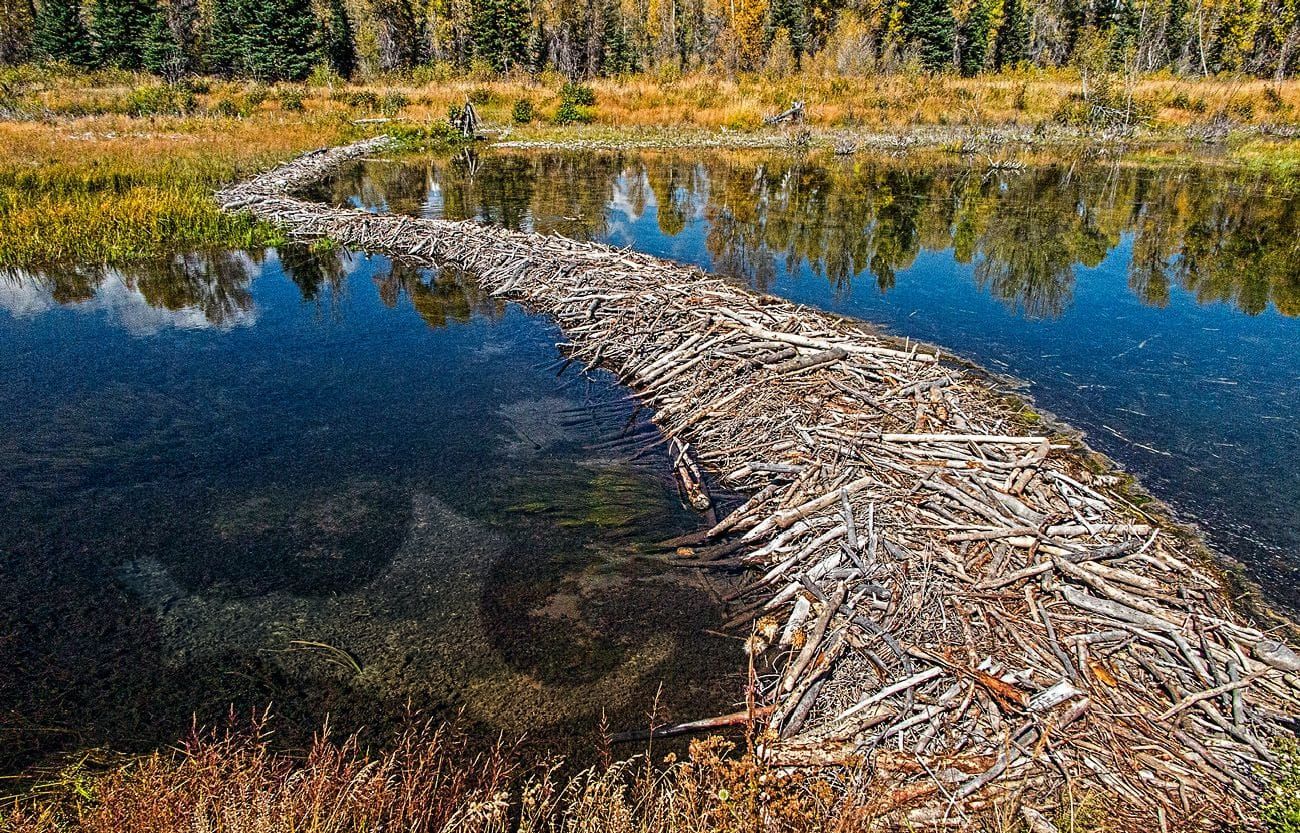
A beaver dam analogue, usually called a BDA, is a low, porous structure built across a small stream from posts, branches and other natural materials. It does not attempt to reproduce every detail of a beaver dam. It borrows the useful function: interrupt the current, spread water, catch sediment and create hydraulic complexity.
The Natural Resources Conservation Service includes BDAs and post-assisted log structures among the low-tech tools used to improve floodplain connectivity. The emphasis belongs on both words: low-tech and process-based. The structure is not the finished restoration. It is a temporary assist intended to help water, sediment and vegetation begin doing more of the work.
A good BDA leaks. Water passes through it, around it and sometimes over it. The object is not to build a permanent wall. It is to make fast water pause.
“Pataha Creek Beaver Dam Analog Timelapse,” Snake River Salmon Recovery. View on Vimeo
What success looks like
The first useful result may be almost unimpressive: a thin layer of silt or gravel deposited behind the structure. Then more material catches. The channel bed may begin to rise. Water spreads across a wider surface and has more opportunity to soak into adjoining soils. Sedges, rushes, willows and other riparian plants can occupy ground that had become too dry or unstable.
Over time, those plants add roughness, shade and living roots. They slow future flows, protect newly deposited soil and create habitat the simplified channel no longer provided. Instead of one fast chute, the creek can regain pools, side channels, wet margins and patches of slower water.
A 2026 U.S. Geological Survey review of BDA work in northern New Mexico describes the intended hydrologic effects in similarly practical terms: slowing flow, increasing infiltration, raising shallow groundwater and potentially supporting later-season water. Importantly, the agency is still monitoring those sites. The promise is real, but so is the need to measure what actually happens.
“Beaver Dam Analog Post Installation NYCD,” Yakima Basin Fish and Wildlife Recovery Board. View on YouTube
The structure is not the point
It is easy to mistake the installation for the accomplishment. A crew drives posts, weaves branches, takes photographs and leaves behind something that looks like a dam. But the proper test begins after the work is done.
Did the structure catch sediment? Did it spread water without creating a new erosion problem? Did groundwater or soil moisture improve? Did riparian vegetation respond? Did the next runoff strengthen the treatment, damage it or bypass it entirely?
A BDA can be repaired, modified, added to—or abandoned. That is not a weakness of the method. It is part of managing a living system. Low-tech restoration works best when the land manager watches the response and adjusts the treatment instead of defending the original design.
Where the idea can fail
No restoration tool works everywhere. A narrow, high-energy channel may carry more force than a light structure can withstand. A site without enough sediment, room for water to spread or vegetation capable of responding may offer little for a BDA to work with. Poor placement can push water into a bank, threaten infrastructure or simply move the erosion downstream. Permitting, water rights, fish passage and neighboring property also have to be considered before work begins.
And a BDA should not be treated as a guaranteed way to bring beavers back. In one USGS-supported study on Utah’s Price River, researchers evaluated 70 artificial structures intended to improve beaver translocation. Beaver activity appeared at only two structures, and the BDAs did not improve survival or site fidelity. The result does not prove that BDAs have no hydrologic value. It does show that building a structure and restoring the biological system are not the same thing.
This is the danger in every popular restoration idea: a useful tool becomes a recipe, then the recipe becomes a promise.
A better field test
Before building, a land manager should be able to answer five questions:
- What process is missing—sediment retention, floodplain access, water storage, vegetation, habitat complexity or some combination?
- Does the valley have room for water to spread safely?
- Are the expected flows, sediment supply and plant community suited to a low, permeable structure?
- What will be measured before and after installation?
- What will trigger repair, redesign or removal?
Those questions are less exciting than a dramatic before-and-after photograph. They are also more likely to produce one.
The lesson from beavers is not that every creek needs a dam. It is that healthy streams often depend on resistance: small interruptions that keep water from leaving too quickly and give soil and plants time to rebuild the valley floor.
The best restoration does not overpower a creek. It gives natural processes a foothold, then pays close attention to what the land does next.
Sources and further reading
- Natural Resources Conservation Service: Low-Tech Process-Based Restoration to Enhance Floodplain Connectivity
- USDA Climate Hubs: Incised Stream Restoration in the Western U.S.
- U.S. Geological Survey: Beaver Dam Analogs as Nature-Based Solutions to Mitigate Snowpack Loss in Northern New Mexico
- U.S. Geological Survey: Beaver Dam Analogs Did Not Improve Beaver Translocation Outcomes in a Desert River
Editorial note: This is a Pitchstone Waters institutional editorial developed with AI assistance under human direction. It draws on Chris Gill’s published work and Pitchstone’s documented principles, but it is not presented as a new article written by Chris Gill.
