Bison Haven't Moved Like This In A Century And The Effects On The Land Are Staggering Scientists
America's largest native herbivore continues to demonstrate its vital role as an ecosystem engineer.


A new Yellowstone study reveals that migrating bison don't just consume grass—they help create healthier grasslands. By stimulating soil microbes, recycling nutrients, and encouraging fresh plant growth, America's largest native herbivore continues to demonstrate its vital role as an ecosystem engineer.
This ought to put to rest the notion that large herbivores are merely consumers of the land. When they're allowed to behave as nature intended, they're builders every bit as much as grazers. We've spent generations trying to manage ecosystems with fences, machinery, and prescriptions, yet Yellowstone keeps reminding us that healthy landscapes were shaped by moving herds long before we arrived. Sometimes the best land managers have four legs and have been doing the job for thousands of years.
NOTE: this image and commentary below was originally published to "Top 10's" Facebook page on July 30, 2026.
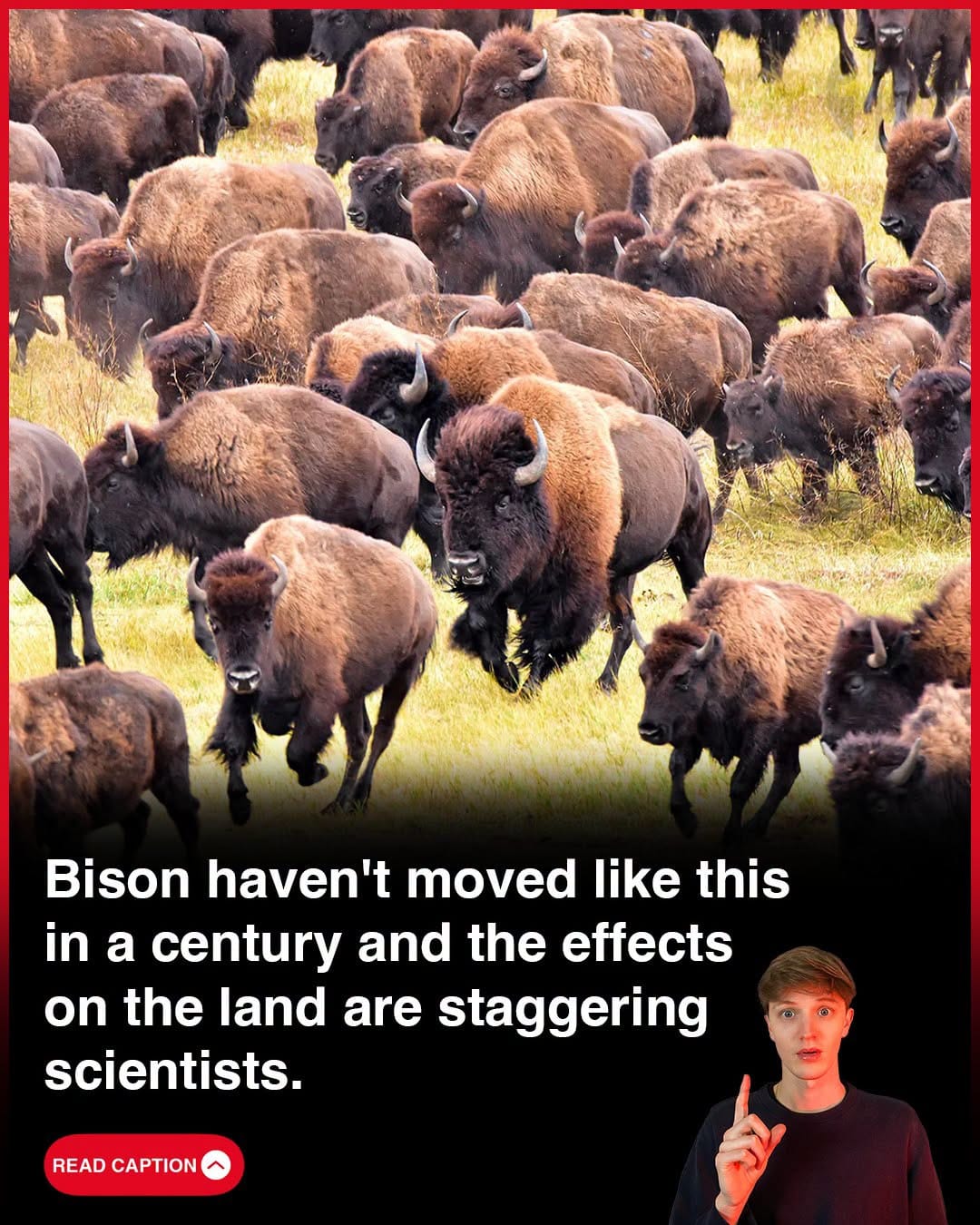
Scientists tracked thousands of free-roaming bison in Yellowstone and discovered that their movement is transforming the land.
The herds migrate across vast areas, grazing intensely before moving on and allowing the plants behind them to recover.
Researchers found that this repeated movement stimulated soil microbes, accelerated the cycling of nutrients and encouraged fresh, protein-rich grass to regrow.
In some habitats, the bison created more than twice as much available plant protein during peak season.
Across the wider landscape, the estimated amount of available plant protein rose from roughly 3.45 million kilograms to 6.67 million kilograms.
Despite consuming enormous amounts of vegetation, the herds did not destroy the grasslands.
Instead, the plants regrew, soil health remained stable and plant diversity increased compared with measurements taken decades earlier.
For centuries, vast bison migrations shaped ecosystems across North America.
Today, Yellowstone offers a rare glimpse of what happens when thousands of them are once again allowed to move freely.
The bison are not simply living on the land.
Their movement is helping rebuild it.
