A Humane Way To Manage Wild Horses Already Exists. Why Isn’t It Being Used
The USA now has more wild horses in captivity than running free on the rangelands in the West.


Wild horses are possibly the greatest of all American native species.
Our ranges and forests are declining because they have too few animals to deliver the animal impact they need to be healthy. Horses can fill the gap, and excess populations can be harvested for human use, as they have been for millions of years.
The war on wild horses, which includes chemical sterilization touted below, is the most unnatural - and stupid - of our many wildlife ‘management’ perversions.
NOTE: this article was originally published to UtahNewsDispatch.com on September 16, 2025. It was written by Tracy Wilson.
This article was republished using Creative Common's license offered by the original content creator.
America’s wild horses have faced competition from livestock, unfair resource allocation, and shrinking habitat for generations.
The federal government’s response has been traumatic and controversial, including helicopter roundups at taxpayer expense. These roundups have proven ineffective in the long term, yet they continue, despite the outrageous cost.
Nevada’s Virginia Range is home to a treasured population of wild horses facing a shrinking habitat because of human and industrial encroachment. The Virginia Range, just east of Reno, is also home to the world’s largest wild horse fertility control program, proving another path is possible — and it’s working. American Wild Horse Conservation (AWHC) is leading the way in humanely reversing wild horse population growth through its self-funded fertility control program. Having recently finished its sixth year (and beginning year seven), the program has achieved something remarkable: an 82 percent reduction in foal births between January-June 2025 compared to the same period in 2020.
Seeking to demonstrate that well-researched fertility control could be scaled up, the results of AWHC’s work were analyzed, peer-reviewed and published in the journal Vaccines last year, marking the most successful wild horse fertility control program of its size in the United States — if not the world.
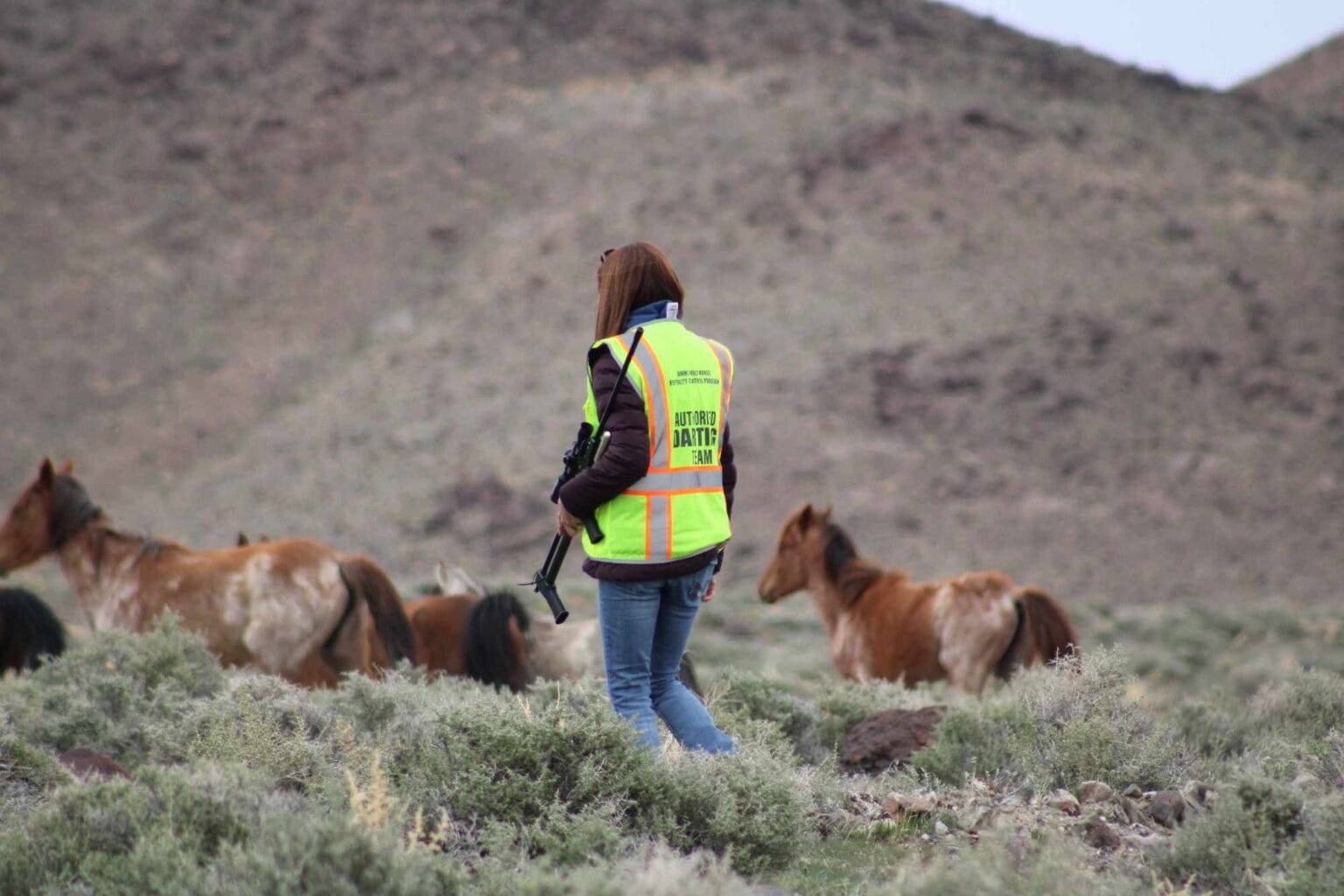
The Virginia Range program uses an immunocontraceptive vaccine known as PZP (porcine zona pellucida). Administered by trained volunteers via remote darting, PZP prevents pregnancy in mares without harming hormone cycles or behaviors, and it’s reversible. Unlike roundups, it doesn’t traumatize or remove horses from their habitat.
The scale of this effort is significant.
More than 40 community volunteers have worked across almost 300,000 acres to reach over 70 percent of reproductive-age mares. Combined with natural attrition and predation, their efforts have begun to reduce the overall population in areas where darting is consistently applied. These results are impressive, and they prove that humane management without cruel and costly helicopter roundups is a viable option for our nation’s wild herds.
Notably, the program operates without state or federal funding. Local businesses, including Blockchains Inc. and the Tahoe-Reno Industrial Center, have helped support access and logistics, making it a model of public-private cooperation. It’s a humane, scientifically sound, and fiscally responsible approach. And yet it remains the exception, not the rule.
Despite $11 million of funding made available by Congress, federal agencies, particularly the Bureau of Land Management (BLM), have yet to embrace fertility control as a primary management strategy.
Instead, they continue to round up thousands of wild horses each year and house them in long-term holding facilities, where many remain for life, at 30 times the cost per horse of in-the-wild fertility control.
The USA now has more wild horses in captivity than running free on the rangelands in the West.
According to government reports, this system now consumes over two-thirds of the BLM’s wild horse and burro budget, costing taxpayers $100 million annually.
There is no denying that wild horse management is complex. Habitats are shrinking due to development, drought, and competing land uses. But as AWHC’s Virginia Range project shows, compassionate and cost-effective solutions already exist — and they’re scalable. What’s lacking is the political will to shift away from outdated and inhumane practices toward methods that are proven to work.
If the federal government is serious about reforming wild horse management, it should look west to Nevada, where a group of citizen scientists and volunteers is making history.