Helicopters Drones Take-on Noxious Weeds Today
Aiming to kill an invasive species of grass that can choke out native plants and fuel wildfires, Teton County Weed and Pest District is coordinating low-flying helicopters and drones to spray herbicide on 7,000 acres.

Herbicide application alone is insufficient without a robust native seed restoration component following treatment, as bare soil post-cheatgrass is itself a vulnerability — the long-term success of this program will ultimately depend on whether native plant communities can reclaim that ecological space before the next wave of invasion.
NOTE: this article was originally published to JHNewsandGuide.com on August 5, 2023. It was written by Sophia Boyd-Fliegel.
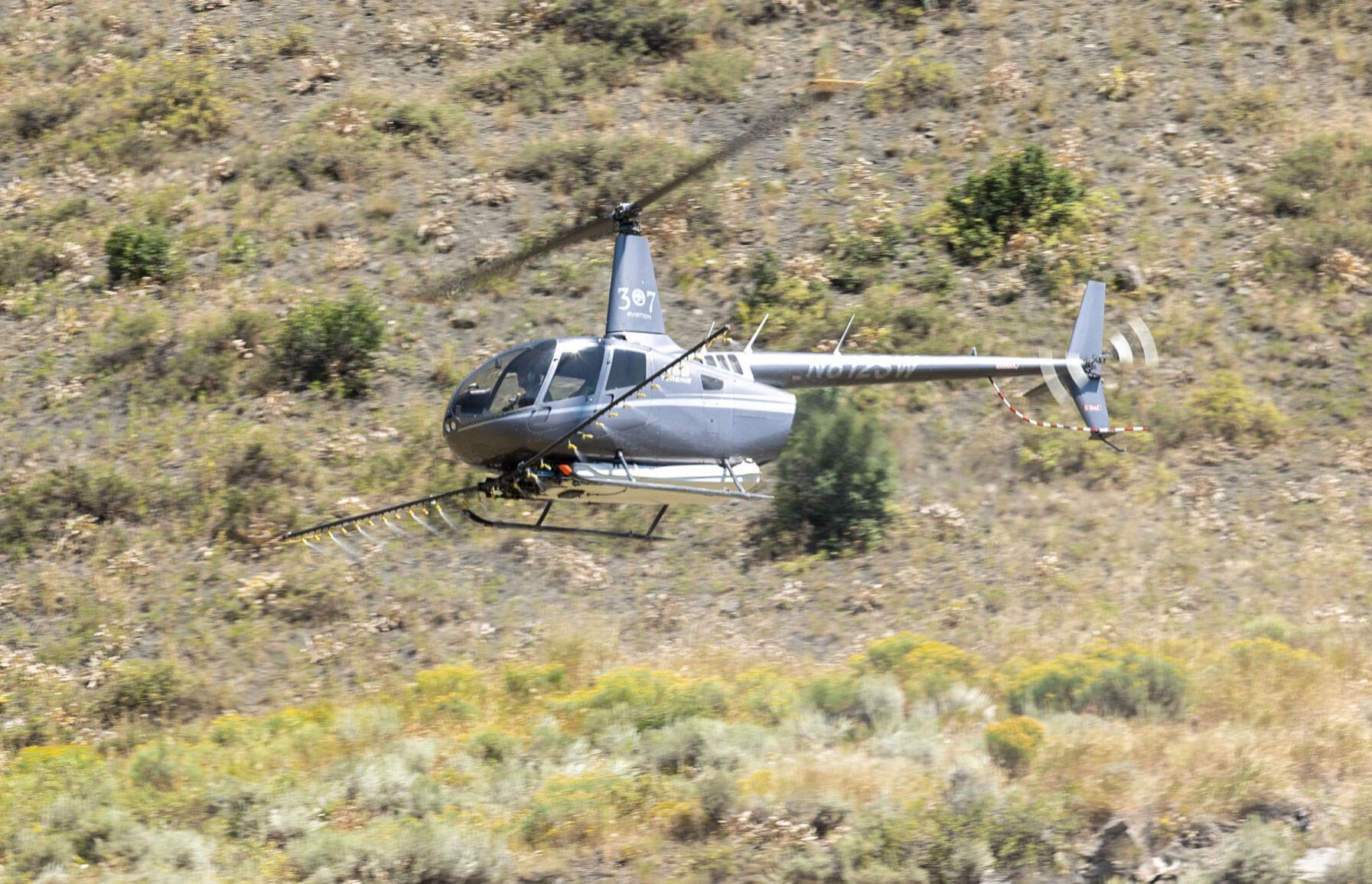
Aiming to kill an invasive species of grass that can choke out native plants and fuel wildfires, Teton County Weed and Pest District is coordinating low-flying helicopters and drones to spray herbicide on 7,000 acres. Helicopters will start Saturday at the National Elk Refuge and work their way south, weather permitting, along high-angle, south-facing slopes where cheatgrass thrives.
“The project is not going to knock out all the cheatgrass in the Bridger-Teton National Forest or all the cheatgrass in Teton County,” said Lesley Beckworth, landowner program coordinator for Weed and Pest. But it will kill seed germination in the top 2 inches of soil in difficult-to-reach areas, which will help slow the spread.
In 2020, Weed and Pest started work to spray a proposed 7,000 acres in Teton County with the herbicide indaziflam following a successful pilot project on East Gros Venture Butte in 2017. Due to poor weather and clunky drones, only 4,300 acres were treated.
Most of the area targeted for treatment — 3,900 acres — is on the Bridger-Teton. Some state land and a few private parcels, where landowners have given permission, also will be sprayed.
“We are trying to get the full 7,000 this year,” Beckworth said. “We have better technology now.”
Before helicopters were permitted, worsening cheatgrass had been gaining ground.
The 2023 budget for the project is $400,000, which includes five funding partners in addition to Weed and Pest. The cost seems high, Beckworth said, but has dropped dramatically per acre since helicopters were added to the mix.
In 2020, helicopter treatments cost $53.40 per acre, including labor and herbicide. By contrast, cheatgrass treatments in 2013 cost $124.94 per acre.
“Those treatments were conducted by horseback sprayers and backpack sprayers, and we were only able to treat 369 acres of cheatgrass,” Beckworth said. “Soul crushing is the way our seasonal crew described that work.”
What’s more, indaziflam provides control of cheatgrass for 3 years while the herbicide previously used only provided one year of control. Indaziflam has not been shown to be carcinogenic or toxic to humans in normal use, according to the most recent EPA fact sheet for the product.
“The risk of exposure is very low to the general public,” Beckworth said.
Recent rain delayed spraying, which had been slated to begin in mid-July. Timing is key since cheatgrass germinates in the fall.
Meteorologist Jim Woodmencey said this month has been wetter and cooler than average due to a “surge of monsoon moisture” moving over the region.
As of Friday morning the Jackson Climate Station had recorded 1.11 inches of precipitation for August, Woodmencey said, which was more than double last month’s 0.55 inches and likely to overtake the monthly average of 1.23 inches in just the first week.
Some hiking trails will be temporarily closed, denoted by signs at trailheads, while helis are overhead. Those trails will include Crystal Butte (near Nelson Drive), East Gros Ventre Butte (along Highway 89 from the National Museum of Wildlife Art toward the town of Jackson), state land on East Gros Ventre Butte, Vogel Hill, High School Butte, Boyles Hill, south-facing slopes along Highway 89 (south of town from Smith’s to Hoback Junction), Hoback Junction toward Stinking Springs.
To view progress on cheatgrass mitigation or to make comments and ask questions, visit TCWeed.org/cheatgrass.